
5 Signs Your Property Needs Professional Land Clearing
There's a point where a brush hog can't save you. Here are five signs your property has crossed that line — and what to do about it.
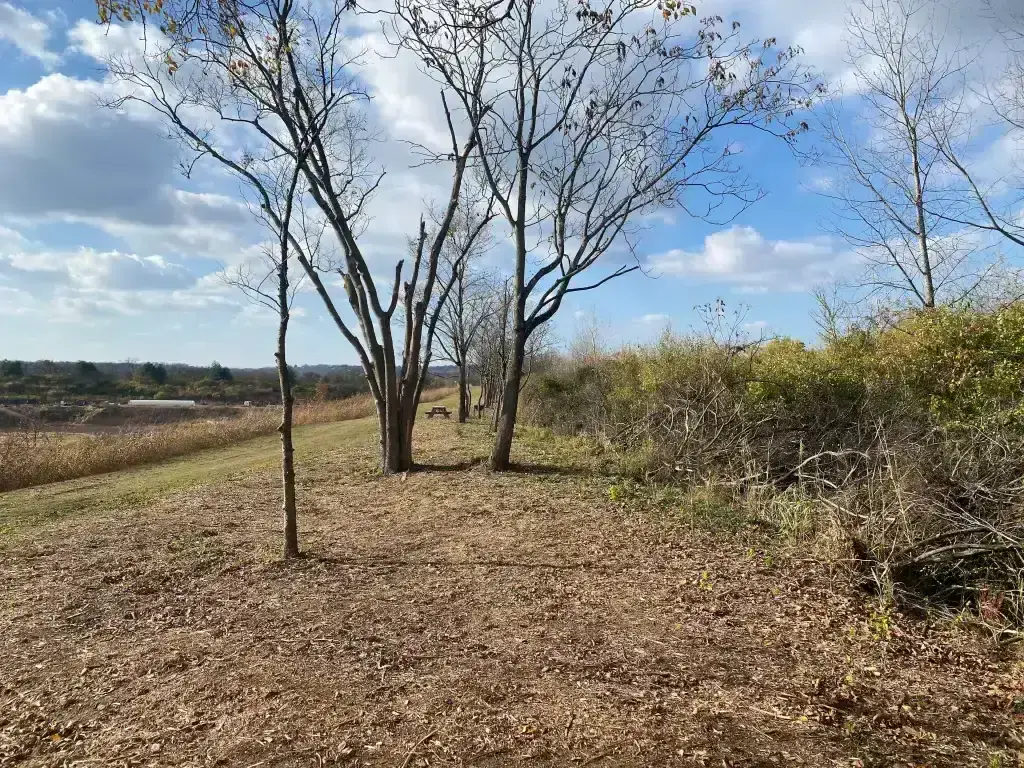
The five signs your property needs land clearing are: inability to walk through the vegetation, invasive species taking over native plants, trees growing through fences or structures, two or more years without mowing or maintenance, and complaints from neighbors or code enforcement notices. When these conditions are present, DIY methods are typically insufficient.
The Honest Question
Not every property needs land clearing. If your yard is shaggy and you just need to mow, go mow. If you've got a few saplings popping up along the back fence, a pair of loppers and a Saturday afternoon will handle it.
But there's a tipping point. One day it's "I should really get back there and clean that up," and the next day it's "I physically cannot get to the back of my property." This post is about recognizing when you've crossed that line — and being realistic about what it takes to come back from it.
We've cleared hundreds of properties across Northern Kentucky and the Cincinnati area. Some were genuinely bad. Some turned out to be easier than the owner thought. Here's how to tell where yours falls.
Sign 1: You Can't Walk Through Your Own Land
This sounds obvious, but it's the single clearest indicator. If you can't walk from one end of your property to the other without a machete, heavy boots, and a willingness to get scratched up, you've got a clearing problem — not a mowing problem.
Here's what "can't walk through" actually looks like in practice:
- Vegetation is above your waist across the majority of the area
- Thorny species (multiflora rose, blackberry brambles, autumn olive) block passage
- You can't see the ground and have no idea what you'd step on
- Dead branches, vines, and fallen limbs create a tangled lattice at shin height
The reason this matters beyond convenience is that inaccessible land is a liability. You can't inspect it for damage, encroachment, or hazards. You can't maintain fences. You can't check for erosion. You can't even show it to a surveyor or appraiser.
We had a client in Grant County who was selling a 5-acre parcel. The buyer's appraiser literally could not access two of the five acres for the appraisal. The deal almost fell through until the seller had those two acres cleared, and the appraisal came back $15,000 higher than the initial estimate because the usable land area was larger than it appeared.
The DIY Test
If you can push through the vegetation with a stick and come out the other side in under five minutes, you might be able to reclaim it yourself with a brush mower rental and a weekend. If you need actual cutting tools just to make forward progress, it's beyond DIY.
Sign 2: Invasive Species Have Taken Over
This is the one that sneaks up on people. You think you've got "some bushes" growing along the tree line. But when you look closer, every single one of those bushes is the same species — and it's not native.
In our part of Kentucky and Ohio, the invasive species that dominate neglected land are remarkably consistent:
Bush honeysuckle (Lonicera maackii) is the king of the hill. It leafs out two weeks before native species in spring and holds its leaves two weeks longer in fall. That extra month of photosynthesis gives it an energy advantage that native plants can't match. Once established, a honeysuckle thicket is so dense that nothing else grows underneath it. Walk into a patch and look down — you'll see bare dirt, not a single wildflower or grass blade.
Callery pear (the feral Bradford pear) has exploded across the region in the last decade. Birds eat the small fruits and spread seeds everywhere. What started as ornamental landscaping trees in subdivisions is now a genuine ecological problem in abandoned fields and roadsides.
Tree-of-heaven (Ailanthus altissima) grows anywhere — cracks in concrete, gravel lots, disturbed soil. It puts out a chemical through its roots that inhibits other plants from growing nearby. Cut one down and it sends up a dozen new sprouts from the stump.
Here's the thing about invasives: they don't just compete with native plants. They win. Every year you wait, the problem gets exponentially harder to reverse. A one-year honeysuckle patch is a trimmer job. A ten-year honeysuckle patch is a forestry mulcher job.
Why does this matter if you don't care about ecology? Because invasive thickets are worthless land. They don't produce timber value. They don't support wildlife habitat (despite having berries — the nutritional content is poor). They don't look good. And they make every other land use — building, fencing, gardening, grazing — harder.
What Clearing Does for Invasive Control
Forestry mulching alone won't eradicate invasives — let's be clear about that. The roots are still alive after mulching, and species like honeysuckle and tree-of-heaven will resprout. But mulching is the critical first step. It removes the above-ground mass, opens the canopy to sunlight, and gives you access to the stumps for follow-up treatment.
After mulching, targeted herbicide application on the cut stumps prevents regrowth. One season of mulching plus stump treatment can reclaim land that took a decade to lose.
Sign 3: Trees Are Growing Through Your Fences
There is something almost poetic about a tree growing through a chain-link fence. Unfortunately, it's also a sign that your property has been on autopilot for too long.
When trees grow up against and through fencing, several things happen:
- The fence fabric distorts and tears as the trunk expands
- Fence posts get pushed out of plumb by root growth
- The fence line becomes a trellis for vines and climbing invasives
- Replacing or repairing the fence becomes impossible without removing the trees first
We see this constantly along property boundaries where one owner maintains their side and the other doesn't. The unmaintained side sends saplings up through the fence from both the ground and from overhanging branches that root where they touch down.
Board fences, wire fences, chain-link — they all get compromised. And the longer a tree grows around fence material, the more embedded the metal becomes in the wood. After a certain point, you can't save the fence. You clear the tree, pull the old fencing, and start over.
The Practical Impact
If you're a livestock owner, trees through fences mean gaps where animals escape. If you're in a subdivision, it means the boundary between your property and your neighbor's becomes unclear and contentious. If you're selling, it means the surveyor flags it as an issue.
Fence line clearing is one of our most common jobs. Most people put it off because the fence "still mostly works." By the time they call, there are 15-foot trees growing on either side of what used to be a clean line. A couple hours of mulching along the fence row opens it back up and lets a fence crew come in behind us.
Sign 4: It's Been 2+ Years Since Anyone Mowed or Maintained
Two years is the threshold. That's roughly how long it takes for a mowable field to become an unmowable one in our climate.
Here's the timeline of neglect for a typical Northern Kentucky property:
Year 1: Tall grass, some broadleaf weeds, early wildflowers. A bush hog or brush mower still handles it, though it's a rough cut. You'll probably clog the deck a few times.
Year 2: Woody stems appear. Honeysuckle seedlings, autumn olive, young mulberry, wild cherry. These are ankle to knee height and a brush mower will still clip them, but it's getting harder. The grass is now mixed with plants that have stiff, fibrous stems.
Year 3: The woody stems from year two are now 3-6 feet tall and some are over an inch in diameter. A standard bush hog will bounce off them. You need either a heavy-duty rotary cutter on a tractor or a forestry mulching machine. The window for mowing your way out of this has closed.
Year 5+: You have a young woodland. Stems are 2-4 inches in diameter, 10-15 feet tall, and forming a closed canopy. Ground-level vegetation has shifted to shade-tolerant species. No mowing equipment will touch this.
If you're reading this and thinking "that's exactly what happened" — you're not alone. This is the single most common story we hear. "It was just a field, and then it wasn't."
The math is straightforward: mowing a field once a year costs $100-$300 depending on size. Clearing a field that hasn't been mowed in five years costs $1,500-$3,000. The maintenance approach is always cheaper than the recovery approach.
The Exception
Some people don't want a mowed field. They want the land to naturalize — to return to native woodland or meadow. That's a valid choice. But even naturalization benefits from active management. Letting land "go wild" without any intervention almost always results in invasive domination, not native recovery. If you want native habitat, you need to clear the invasives and plant or encourage what you actually want growing there.
Sign 5: Neighbors Are Complaining or Code Enforcement Has Contacted You
Nobody wants to get a letter from the county. But when it arrives, it means your property has become someone else's problem.
Code enforcement complaints related to overgrown property typically involve:
- Vegetation encroaching onto neighboring property or public right-of-way — branches hanging over the road, brush blocking a neighbor's sight lines, vines climbing onto adjacent structures
- Tall grass and weed ordinance violations — most municipalities in our area have height limits, often 8-12 inches for residential properties
- Pest and wildlife harbor concerns — overgrown lots attract rodents, snakes, and coyotes, and neighbors notice
- Property value complaints — a neighbor's overgrown land can measurably reduce surrounding property values, and people get vocal about it
In Kentucky, if you don't address a code violation within the specified timeframe (usually 10-30 days), the city or county can hire a contractor to clear it and bill you — often at a higher rate than you'd pay hiring someone yourself. And they're not going to be careful about which trees they keep.
Before It Gets to That Point
If a neighbor mentions your overgrowth, take it seriously. They've probably been thinking about it for a while before they said something. A conversation and a plan go a long way — "I know it's gotten out of hand, I'm scheduling a crew for next month" diffuses most conflicts.
If code enforcement has already contacted you, respond promptly. Get an estimate, show them you're addressing it, and ask for a timeline extension if you need one. Most enforcement officers are reasonable when they see the property owner is making an effort.
The Tipping Point: DIY vs. Calling Someone
Let's lay out where the line actually is, because we're not trying to sell you a service you don't need.
| Situation | What to Do | Why |
|---|---|---|
| Tall grass under 2 feet, no woody stems | Mow it yourself | A brush mower rental handles this |
| Knee-high brush, a few small saplings | Rent a heavy brush cutter | A hard weekend but doable |
| Waist-high brush with stems 1"+ diameter | Consider hiring help | Equipment cost and physical effort get real |
| Can't walk through, woody stems 2"+ | Call a clearing crew | Mowing equipment won't cut it — literally |
| Trees through fences, invasive canopy | Forestry mulching | This is what the machine was built for |
If you're in the top two rows, save your money. You can handle it. If you're in the bottom three, give us a call and we'll walk the property with you.
Here's the real test: go stand at the edge of the overgrown area. If your first thought is "I could knock this out in a weekend," you probably can. If your first thought is "I don't even know what's in there," that's your answer.
What Happens After You Make the Call
For the people who recognize themselves in two or more of these signs, here's what the next step looks like. It's not complicated.
We come out and walk the property with you. We look at access, terrain, vegetation type, and density. We flag anything you want to keep. We give you a flat-rate number on the spot — no hourly estimates where you're wondering what it'll come to.
If you approve, we schedule the work, usually within one to two weeks. For most residential lots, clearing takes a single day. You come home to open ground covered in a natural mulch layer where there used to be a jungle.
The people who wait the longest are always the ones who say the same thing afterward: "I should have done this years ago." And honestly, they're right. But the second-best time to schedule a free estimate is today.
Related Services
We Serve These Areas
5 Signs Your Property Needs Professional Land Clearing FAQ
If the vegetation is primarily tall grass without woody stems, a brush mower or bush hog can handle it. Once you see woody stems over one inch in diameter, saplings forming a canopy, or thorny invasive thickets, mowing equipment will no longer work and land clearing is needed.
Forestry mulching removes all above-ground growth, but invasive species like bush honeysuckle and tree-of-heaven will resprout from roots. Follow-up stump treatment with targeted herbicide after mulching prevents regrowth and provides long-term control.
Most neglected residential lots in Northern Kentucky cost $800–$3,000 to clear depending on lot size, vegetation density, and terrain difficulty. A walk-through estimate gives you a firm number before any work begins.
Respond promptly to the enforcement agency, get a clearing estimate, and ask for a timeline extension if needed. Most enforcement officers work with property owners who demonstrate they are actively addressing the violation.
Unmanaged land in Northern Kentucky almost always becomes dominated by invasive species rather than returning to native habitat. Active management — clearing invasives and encouraging native plants — is necessary for genuine ecological restoration.
Ready to Get Started?
Free on-site estimates for all properties in our service area.
Ready to Clear Your Land?
Get a free, no-obligation estimate for your project. We respond fast and show up on time.
Try our cost calculator · Serving Northern Kentucky, Greater Cincinnati, and Southeast Indiana · 24/7 — Emergency Service Available