
Forestry Mulching vs. Bulldozing: Cost, Speed, and Results Compared
A direct comparison of forestry mulching and bulldozing for land clearing. Costs, timelines, soil damage, and honest advice on which method fits your project.
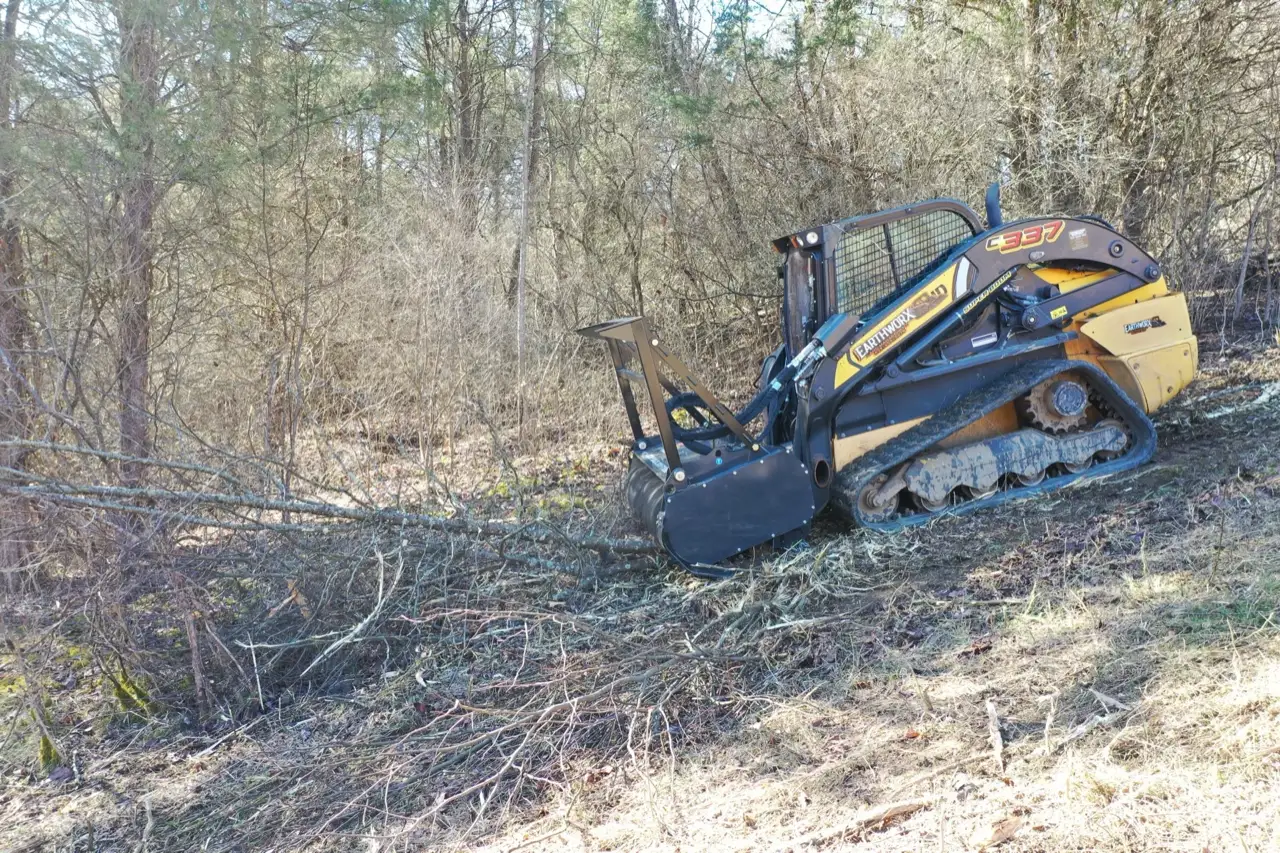
Forestry mulching costs $1,500–$5,000 per acre and uses one machine to grind vegetation into mulch on-site, preserving topsoil. Bulldozing costs $2,000–$6,000 per acre before hauling and grading, and removes everything down to bare dirt. Mulching is cheaper and faster for most clearing jobs, but bulldozing is necessary for foundation excavation, rock removal, and precision grading.
The Bulldozer Question
Almost everyone who calls us about land clearing has the same mental image: a big yellow bulldozer pushing over trees. It is the method people picture because it is the method most people have seen. And honestly, for decades it was the only real option for clearing land at scale.
Forestry mulching changed that. But bulldozing did not go away, and it should not. Both methods exist because both are useful for different situations. The problem is that most property owners do not know where the line is between them.
I have worked alongside dozer operators on plenty of jobs. Good ones are worth their weight in gold. But I have also walked properties after a dozer crew finished and thought, "This did not need to look like this." Torn-up topsoil, deep ruts, stripped ground bleeding mud into the neighbor's pond after the first rain. That is what happens when the wrong method gets used.
So let me lay out when each method makes sense.
How Each Method Works
The Forestry Mulcher
A tracked machine with a spinning drum mounted on the front. The drum has hardened steel teeth that shred standing vegetation, from grass and brush up to trees in the 8–12 inch diameter range. Everything gets processed into chips and mulch that fall right where the vegetation stood. One machine, one operator, and nothing leaves the property.
The mulcher rides on tracks that spread the machine's weight across a wide footprint. On dry ground, we leave minimal tracks. The mulch layer actually protects the soil surface as we work across it.
The Bulldozer
A dozer clears land by pushing. The blade shoves trees, brush, and stumps into piles. On big jobs, the piles get burned (with a permit) or loaded into dump trucks and hauled off-site. The dozer then makes grading passes to level the disturbed ground.
Dozers are brutally effective. They do not care about tree diameter. A D6 will push over a 24-inch oak without slowing down. But that power comes with a heavy footprint. The tracks compact the soil. The blade scrapes away topsoil along with the vegetation. The root systems get ripped out of the ground, leaving craters that need to be filled and graded.
Side-by-Side Comparison
| Factor | Forestry Mulching | Bulldozing |
|---|---|---|
| Per-acre cost (clearing only) | $1,500–$5,000 | $2,000–$6,000 |
| Hauling/disposal cost | $0 (mulch stays on-site) | $1,500–$4,000+ |
| Grading cost after clearing | Usually not needed | $1,000–$3,000 |
| Total per-acre cost | $1,500–$5,000 | $4,500–$13,000 |
| Speed (acres per day) | 1–3 | 1–2 |
| Max tree size | 8–12" diameter | No practical limit |
| Topsoil condition after | Intact, covered in mulch | Stripped and compacted |
| Stump depth | Ground level | Removed completely |
| Erosion risk | Low | High until stabilized |
| Equipment on-site | 1 machine | 2–4 machines + trucks |
| Noise duration | 1–2 days typical | 3–7 days typical |
The Real Cost Difference
This is the part where people's eyes open. The per-acre clearing rate for a dozer often looks competitive with mulching. A dozer operator might quote $2,500 an acre. We might quote $2,800 an acre for the same property. On paper, the dozer looks cheaper.
But clearing with a dozer is just step one. Here is the rest of the bill:
Debris disposal. Those push piles have to go somewhere. If you burn them, you need a permit from your county, and the burn has to be managed. Figure $300–$800 for permit and burn management. If you haul debris, figure $500–$800 per truckload, and a single acre of moderate timber fills 2–4 trucks. That is $1,000–$3,200 just in hauling.
Stump holes and grading. When a dozer pushes a stump out, it leaves a hole. Every stump leaves a hole. A 2-acre lot with 30 stumps means 30 holes that need to be filled and graded. A grading pass with a small dozer or skid steer runs $1,000–$3,000 depending on how torn up the site is.
Topsoil replacement. If you plan to grow anything on the cleared ground, whether that is a lawn, pasture, or a garden, you are going to need topsoil. A dozer strips the top 4–6 inches of organic soil along with the vegetation. Replacing that topsoil runs $25–$40 per cubic yard delivered and spread. For an acre at 4 inches deep, that is roughly 500–600 cubic yards, or $12,500–$24,000. Most people skip this and wonder why nothing grows.
Add it all up and the "cheaper" dozer quote is often 50–100% more expensive than mulching when the job is actually finished.
I had a customer in Florence last year who got a dozer quote for $2,200/acre on a 2-acre lot. Our mulching quote was $3,000/acre. He went with the dozer. Two months later he called me because he had spent $4,800 on hauling, $2,000 on grading, and the ground was still too compacted to grow grass. His total was over $11,000. Our quote would have been $6,000 all-in, and he could have seeded right into the mulch.
When Bulldozing Is the Right Call
I would not be giving you the full picture if I only talked about mulching. There are real, practical situations where you need a dozer. Here they are.
Foundation and Building Pad Preparation
If you are pouring a foundation, you need stumps completely removed. Not ground to grade level, removed. Roots decompose over time and create voids under footings. No building inspector is going to sign off on a foundation poured over mulched stumps.
For building sites, the typical approach is to have an excavator grub out all stumps in the building pad area, then grade and compact the soil to meet engineering specs. Forestry mulching cannot do this.
What we can do is mulch everything outside the building footprint while the excavator handles the pad. This hybrid approach is common on our jobs and saves the landowner money compared to bulldozing the entire property.
Rock and Ledge Removal
Parts of Northern Kentucky and the Greater Cincinnati area sit on limestone that surfaces close to the ground. Along the Ohio River bluffs and through parts of Campbell County, rock outcrops and buried ledges are common. If clearing includes breaking or removing rock, you need an excavator with a hydraulic breaker. A mulching head does not process stone.
We can mulch vegetation off rocky terrain without any issue. But if the rock itself needs to go, that is dozer and excavator territory.
Clearing Timber Over 14 Inches
Our mulching equipment handles trees up to about 10–12 inches efficiently. We can process larger stems, but it is slow and hard on the machine. A stand of mature 16–20 inch hardwoods is better handled by a chainsaw crew or feller buncher, with a dozer or excavator managing the material afterward.
For properties with a mix of large and small timber, the best approach is usually selective logging of the big stuff followed by mulching the remaining brush and small trees. The landowner sometimes gets paid for the timber, which offsets clearing costs.
Pond Building and Major Earthwork
If the clearing is part of a bigger earthmoving project, like building a pond, cutting a road grade, or reshaping terrain, the dozer is already on-site. It makes sense to use it for clearing too, since mobilization is a one-time cost.
The Soil Question
This is the factor that gets overlooked the most, and it is the one that matters the most long-term.
Topsoil in Northern Kentucky is not deep. In many areas, you have 4–8 inches of organic soil sitting on top of dense clay subsoil. That thin layer of topsoil took hundreds of years to develop. A bulldozer blade strips it off in one pass.
Once that topsoil is gone, the clay underneath does not support plant growth well. It compacts into a hard surface that sheds water instead of absorbing it. Grass seed sits on the surface and washes away. The clay cracks in dry weather and turns to soup in wet weather.
Mulching preserves every inch of that topsoil. The mulch layer on top acts as a natural amendment, slowly feeding organic matter back into the ground as it decomposes. Grass seed germinates well in mulch. Erosion is minimal because the ground never gets exposed.
On a 5-acre property in Grant County we mulched last fall, the owner seeded fescue and clover in mid-October. By April, the entire 5 acres had a solid stand of grass growing right through the decomposing mulch. No topsoil purchased. No erosion blankets. No reseeding.
Compare that to a bulldozed site down the road from the same property. Cleared the same month. Still mostly bare clay six months later with erosion channels forming on every slope. The owner is now looking at bringing in topsoil and starting over. That is a $15,000–$20,000 fix on a 5-acre lot.
Speed and Disruption
Mulching is faster on most residential and small-acreage jobs. A single mulcher can clear 1–3 acres per day depending on vegetation density. We show up in the morning and leave in the afternoon. One machine, one trailer, minimal disruption to the road and the neighbors.
Bulldozing a similar property takes 3–7 days when you count clearing, grubbing, pile management, hauling, and grading. Multiple trucks coming and going. Heavy equipment idling. Diesel fumes. Backup alarms at 7 AM.
If you live in a subdivision or your neighbors are close, the difference in disruption is significant. We have done clearing jobs in Burlington and Hebron where the neighbor did not even know we were working until they looked out the window and saw the brush was gone. You cannot say that about a dozer operation.
What About Rental Dozers and DIY Clearing?
I get asked this sometimes: "Can I just rent a dozer and do it myself?" You can rent a D4 or D5 dozer for about $2,000–$3,500 per week from a regional equipment rental company. Transport to your site adds $500–$1,000 each way.
If you know how to operate a dozer, this can work for flat, open ground with small trees. But there are real risks. Dozer work on slopes is dangerous. Buried utilities are a liability. And most rental companies require proof of experience or charge extra for insurance riders.
The bigger issue is what happens after. You still need to deal with the push piles. Burning requires a permit and clear conditions. Hauling requires trucks you probably do not own. And the ground is going to be a mess that needs grading.
DIY clearing usually costs more in total time and money than hiring a mulching contractor. It just spreads the pain out over a longer period.
Our Recommendation
For most properties in Florence, Independence, and the surrounding area, forestry mulching gets you better results at lower total cost with less disruption. The topsoil stays put. The mulch protects the ground. You can seed immediately.
For construction sites where foundations are going in, you will need at least some dozer and excavator work for the building pad. But you do not need to bulldoze the entire lot. Mulch the areas that are staying natural, and excavate only where structures are going.
Not sure which approach fits? Get a free estimate and we will look at your property, talk about your plans, and give you a straight recommendation. If a dozer is the right tool, we will tell you that. We would rather point you in the right direction than try to sell a service that does not fit your project.
Related Services
We Serve These Areas
Forestry Mulching vs. Bulldozing: Cost, Speed, and Results Compared FAQ
Yes, in most cases. Forestry mulching runs $1,500–$5,000 per acre total. Bulldozing may quote $2,000–$6,000 per acre for clearing alone, but hauling, grading, and topsoil replacement add $2,500–$7,000+ per acre on top. The total project cost for bulldozing is typically 50–100% higher than mulching.
A forestry mulcher clears 1–3 acres per day depending on vegetation density, which is comparable to or faster than a bulldozer for most jobs. However, a bulldozer handles trees of any diameter, while a mulcher works most efficiently on trees up to 10–12 inches. Very large timber slows mulching significantly.
Yes. Bulldozing strips the organic topsoil layer, compacts the subsoil with heavy equipment, and leaves the ground exposed to erosion. In Northern Kentucky, where topsoil sits on dense clay, this damage can take years to remediate. Topsoil replacement on a bulldozed acre costs $12,000–$24,000.
You can build on mulched land, but the building pad area will need additional work. Stumps must be removed to 12–18 inches below grade for foundations, and the pad must be graded and compacted. Most builders use a hybrid approach: mulching the majority of the lot and excavating only the building footprint.
Choose bulldozing when you need complete stump removal for foundations, rock removal, precise finish grading for a building pad, or when clearing timber over 14 inches in diameter. If the clearing is part of a larger earthmoving project like pond construction or road building, the dozer is already on-site and makes sense for clearing too.
Ready to Get Started?
Free on-site estimates for all properties in our service area.
Ready to Clear Your Land?
Get a free, no-obligation estimate for your project. We respond fast and show up on time.
Try our cost calculator · Serving Northern Kentucky, Greater Cincinnati, and Southeast Indiana · 24/7 — Emergency Service Available