
How to Get Rid of Honeysuckle in Northern Kentucky
Amur honeysuckle has taken over most of Northern Kentucky. Here is what actually works to remove it and what just wastes your time.
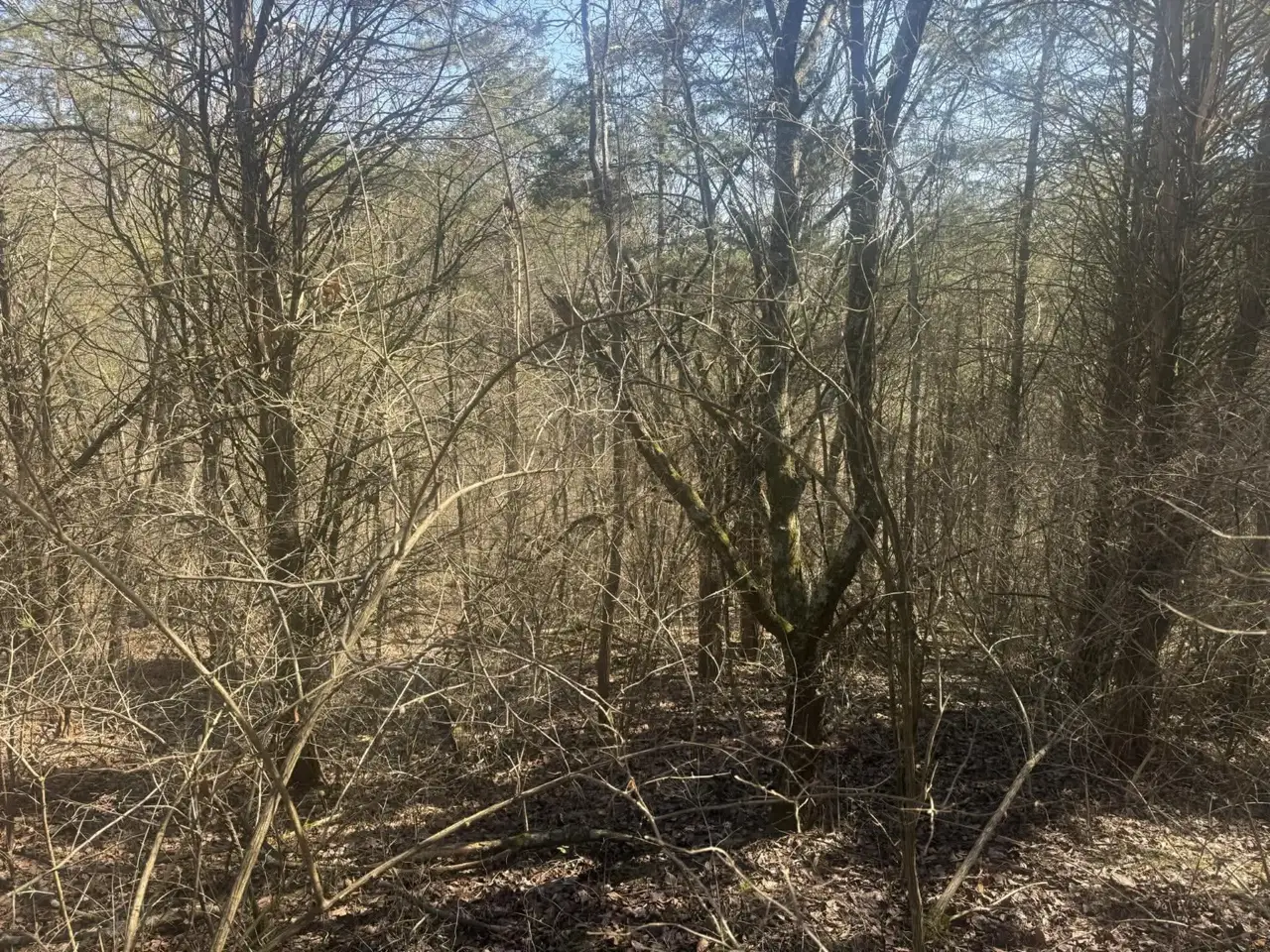
The most effective way to remove honeysuckle in Northern Kentucky is forestry mulching followed by herbicide application 6 to 8 weeks later. Late fall through early spring is the best timing because native plants are dormant and honeysuckle stays green and visible. DIY hand-pulling works for small patches but is impractical for anything over a quarter acre.
Honeysuckle Is Everywhere in Northern Kentucky
If you own property in Boone, Kenton, or Campbell County, you have honeysuckle. That is not an exaggeration. Amur honeysuckle — the invasive bush variety, not the native vine — has colonized almost every woodlot, fence row, creek bank, and neglected yard in the tri-state area. It is the single most common reason people call us for clearing work.
The stuff grows fast. A single bush can go from knee-high to 15 feet tall in a few years. It leafs out earlier than native plants in spring and holds its leaves later in fall, which gives it a competitive edge. Underneath a honeysuckle canopy, almost nothing else can grow. No wildflowers, no tree seedlings, no ground cover. Just bare dirt and honeysuckle.
I have walked properties in Erlanger where you literally cannot see 10 feet through the undergrowth. It is all honeysuckle. The property owners had no idea how bad it was because it is green and leafy and looks like it belongs there. It does not.
Why Honeysuckle Is a Problem (Beyond Looks)
It is not just an eyesore. Honeysuckle actively damages your property.
- Shades out native plants — The dense canopy blocks light from reaching the forest floor, killing off wildflowers, native shrubs, and tree seedlings that would otherwise grow. This is a problem we see across all the common invasive species in Northern Kentucky.
- Erosion — Despite looking green and full, honeysuckle provides poor erosion control compared to native understory. The shallow root system does not hold slopes the way native plants do.
- Wildlife habitat loss — Birds eat the berries, which is how it spreads. But honeysuckle thickets provide poor nesting habitat compared to native shrubs. The berries are low in fat content so they are junk food for migrating birds.
- Property value — A woodlot choked with honeysuckle looks neglected. It is harder to walk through, harder to use, and harder to sell. Real estate agents in NKY know this.
- It gets worse every year — Honeysuckle does not plateau. Left alone, it gets denser and taller and pushes further into open areas. What is a manageable patch this year is a wall next year.
DIY Honeysuckle Removal Methods
For small areas — a quarter acre or less — DIY removal is possible. It is not fun, but it works if you stick with it.
Hand-Pulling (Small Plants)
Young honeysuckle plants with stems under about an inch can be pulled out by hand when the soil is moist. Spring and fall after rain are the best times. Grab as low on the stem as you can and pull slowly to get the roots. This works. It is just tedious and limited to small plants.
Anything with a stem over an inch in diameter is not coming out by hand without a weed wrench or similar tool.
Cut-Stump Method
This is the most common DIY approach for larger bushes. Cut the stem as close to the ground as you can with loppers or a chainsaw. Immediately — within five minutes — paint the cut stump with concentrated glyphosate (25 to 50 percent solution) or triclopyr. The fresh cut absorbs the herbicide and kills the root system.
The key word is immediately. If you wait an hour, the cut surface starts to seal over and the herbicide does not penetrate. We have seen people cut a whole area, then go back with herbicide, and wonder why everything resprouted. That is why.
This method works well but it is slow. A determined person with loppers and a backpack sprayer can treat maybe a tenth of an acre in a day. Do the math on anything bigger.
Foliar Spray
Spraying herbicide directly on the leaves works on smaller plants. Glyphosate at 2 to 3 percent or triclopyr are the standard options. The catch is that you will also kill anything else the spray touches. In a mixed forest with native plants underneath, foliar spray is a bad idea in summer because everything is leafed out.
The exception is late fall — November and December in NKY. Honeysuckle keeps its leaves long after native trees and shrubs have gone dormant. So a late-fall foliar spray targets the honeysuckle specifically while everything else is already done for the season. This is actually the most effective DIY timing if you can handle a sprayer.
Professional Removal: Why It Is Worth It for Larger Areas
Anything over a quarter acre, I am going to be honest — DIY removal is not practical. A half-acre of mature honeysuckle represents thousands of individual stems. Cutting and treating each one by hand would take a person weeks of full-time work.
Forestry mulching handles honeysuckle fast. Our mulching head grinds the stems and branches into mulch in a single pass. A half-acre of dense honeysuckle takes us a few hours. An acre, about half a day. The mulched material stays on the ground and actually helps suppress regrowth in the short term.
But — and this is the part people do not want to hear — mulching alone is not enough. Honeysuckle resprouts aggressively from the root crown. If you just mulch and walk away, you will have 6-inch honeysuckle shoots covering the area within two months during the growing season.
The follow-up herbicide treatment 6 to 8 weeks after mulching is what actually kills the plant for good. When the stumps resprout, those new shoots are pulling energy from the root system. Hit them with herbicide at that point and the whole root system dies. Skip this step and you are clearing the same ground again in two years.
Best Timing for Honeysuckle Removal
Late fall and winter is the best window. November through February in Northern Kentucky.
Here is why this timing works:
- Honeysuckle is still green and easy to identify when native trees are bare
- Native plants are dormant, so equipment movement and herbicide have less impact on them
- Ground is firm or frozen, reducing rutting from equipment
- Bird nesting season is over (no risk of disturbing nests)
- Our schedule is more open, so projects get started faster
Spring and summer removal works too. It just costs more and has more complications. You are fighting full leaf cover on everything, the ground is softer from rain, and you have to be careful about nesting birds. It is doable. It is not ideal.
What Honeysuckle Removal Costs
For forestry mulching of honeysuckle specifically, we typically quote $1,500 to $3,500 per acre depending on density and terrain. Honeysuckle is softer wood than hardwoods, so the mulcher moves through it faster. A flat half-acre might run $1,200 to $1,800.
Add $200 to $400 per acre for the follow-up herbicide treatment. Do not skip this. It is the difference between a one-time expense and a recurring one.
For small residential lots — a quarter acre backyard, a fence line, a strip between houses — our minimum charge of $1,200 to $1,500 applies. For those smaller jobs, the cut-stump DIY method might actually be more cost-effective if you have the time and patience.
After Removal: What to Plant
Bare ground after honeysuckle removal will grow something. If you do not decide what, nature will decide for you — and it will probably be more honeysuckle.
For wooded areas, native tree and shrub seedlings are the answer. Spicebush, pawpaw, redbud, and native viburnums all do well in the understory conditions left after honeysuckle removal. Your county conservation district often sells native seedlings in spring at good prices.
For open areas, a native grass and wildflower seed mix appropriate for Kentucky prevents erosion and outcompetes invasive regrowth. We can recommend specific mixes for your soil type.
The key is getting something established quickly. Bare soil is an invitation for the next invasive species to move in.
Common Mistakes We See
- Just mowing or brush hogging honeysuckle. This does not kill it. It comes back thicker. The root system is untouched.
- Cutting without herbicide. Every stump that does not get treated will resprout. Every single one.
- Treating in summer when everything is leafed out. You kill the honeysuckle and the native plants underneath. Wait for late fall.
- Clearing but not replanting. The honeysuckle seeds are already in the soil. Without competition from desirable plants, they germinate right back.
- Underestimating the scope. What looks like a small patch from the road is often much deeper and denser once you walk into it.
Bottom Line
Honeysuckle removal in Northern Kentucky is a two-step process: remove the top growth (mulching or cutting) and kill the roots (herbicide). Skip either step and you are wasting money.
For anything over a quarter acre, professional forestry mulching followed by targeted herbicide is the most cost-effective approach. Time it for late fall or winter if you can. The results are faster, the impact on native plants is lower, and the work is easier.
Call us at (859) 710-6107 or request a free estimate online for honeysuckle removal. We see this problem every single week across Boone, Kenton, and Campbell counties and we know how to handle it.
Related Services
We Serve These Areas
How to Get Rid of Honeysuckle in Northern Kentucky FAQ
Late fall through early spring (November through February) is the best time. Honeysuckle keeps its leaves after native plants go dormant, making it easy to identify and target. Frozen ground reduces equipment damage to your property, and bird nesting season is over.
Yes, if you do not follow up with herbicide. Honeysuckle resprouts aggressively from root crowns after the top growth is removed. A targeted herbicide application 6 to 8 weeks after mulching kills the root system and prevents regrowth. This follow-up step is essential.
Forestry mulching of honeysuckle runs $1,500 to $3,500 per acre in Northern Kentucky depending on density and terrain. Add $200 to $400 per acre for follow-up herbicide treatment. Minimum charge for any job is $1,200 to $1,500 regardless of lot size.
For small areas under a quarter acre, yes. The cut-stump method works well: cut stems close to the ground and immediately apply concentrated glyphosate or triclopyr to the fresh cut. For larger areas, DIY removal is not practical — a half-acre of mature honeysuckle has thousands of stems.
In wooded areas, plant native understory species like spicebush, pawpaw, redbud, and native viburnums. For open areas, use a native grass and wildflower seed mix for Kentucky soils. Establishing native plants quickly is key to preventing honeysuckle from coming back from seed.
No. Amur honeysuckle (Lonicera maackii) is an invasive shrub from Asia. Native honeysuckle species like trumpet honeysuckle (Lonicera sempervirens) are vines, not bushes, and they do not form the dense thickets that the invasive species does. The invasive bush form is the problem in Northern Kentucky.
Ready to Get Started?
Free on-site estimates for all properties in our service area.
Ready to Clear Your Land?
Get a free, no-obligation estimate for your project. We respond fast and show up on time.
Try our cost calculator · Serving Northern Kentucky, Greater Cincinnati, and Southeast Indiana · 24/7 — Emergency Service Available