
Invasive Plants Taking Over Northern Kentucky Properties
Five invasive species are taking over Northern Kentucky. Here is how to identify them, why they spread so fast, and what actually kills them.
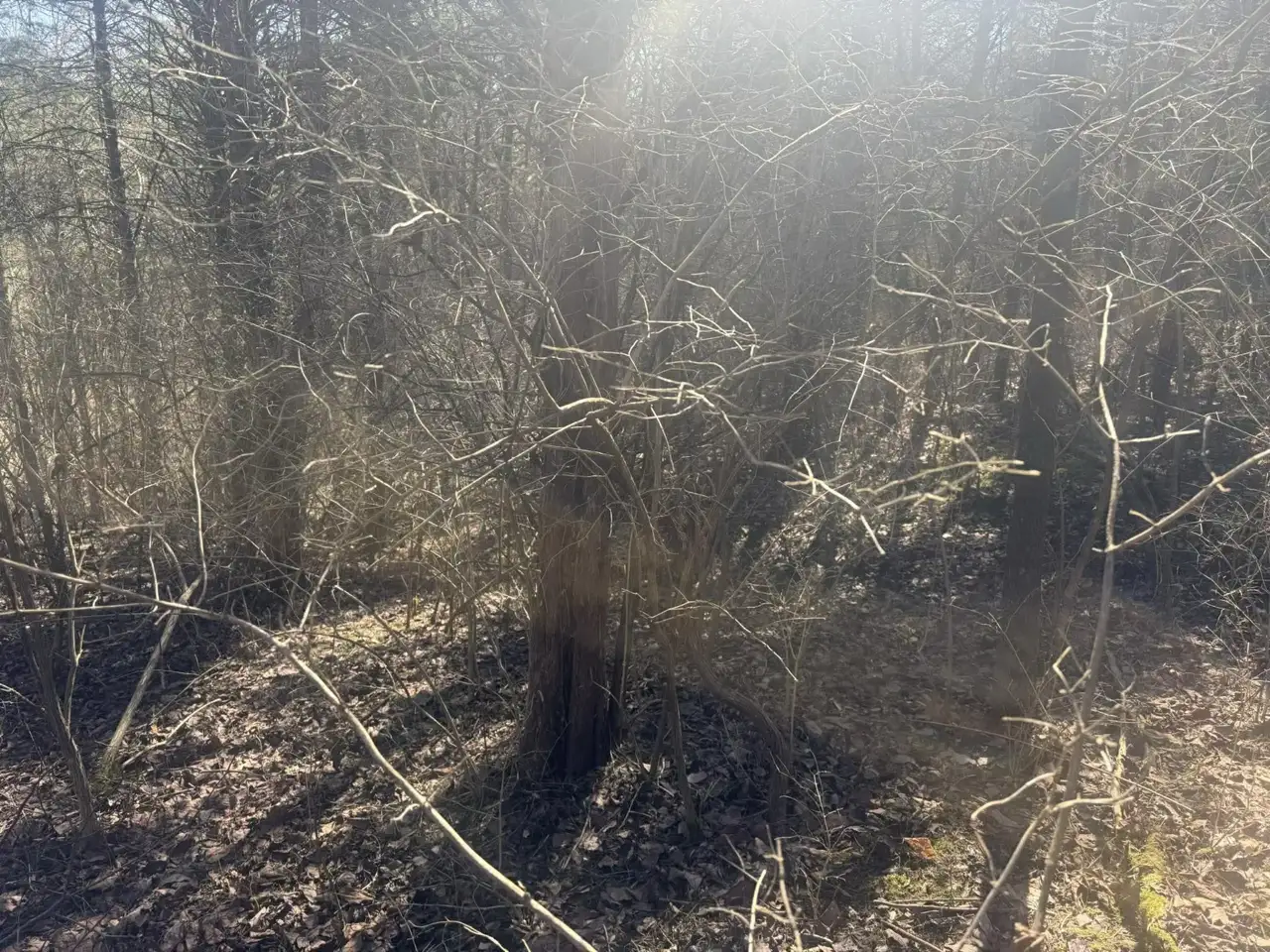
The most problematic invasive plants in Northern Kentucky are Amur honeysuckle, multiflora rose, Bradford pear, Chinese privet, and autumn olive. These species outcompete native plants, degrade wildlife habitat, and reduce property usability. Forestry mulching followed by targeted herbicide application is the most effective removal method for large infestations.
Northern Kentucky Has an Invasive Species Problem
We work on properties across Boone, Kenton, Campbell, and Grant counties every week. I can count on one hand the number of properties we have visited that did not have at least one invasive plant species growing on them. Most have three or four.
This is not a minor nuisance. Invasive plants are actively taking over woodlots, fence rows, abandoned farmland, and suburban green spaces throughout Northern Kentucky. They outcompete native species, wreck wildlife habitat, and turn usable land into impenetrable thickets.
Here are the five worst offenders we see on the ground and what you can do about each one.
1. Amur Honeysuckle (Bush Honeysuckle)
What it looks like: A multi-stemmed shrub that grows 6 to 20 feet tall. Opposite leaves, white to yellow flowers in May and June, red berries in fall. The dead giveaway is that it keeps its green leaves well into December after everything else has dropped.
Where we see it: Everywhere. Creek bottoms, woodland edges, fence lines, backyards, roadsides. It is the single most common invasive species in our service area. Drives along I-71 and I-75 in November will show you a sea of green honeysuckle against bare native trees.
Why it is bad: It leafs out two to three weeks before native plants in spring and holds leaves two to three weeks later in fall. This extended growing season lets it shade out and outcompete everything around it. Under a mature honeysuckle canopy, the forest floor is almost bare. No wildflowers, no tree seedlings, no ground cover for wildlife.
What we do about it: Forestry mulching removes the top growth in a single pass. The mulched material stays on the ground. Follow-up herbicide treatment on the resprouts 6 to 8 weeks later kills the root crowns permanently. Without the herbicide step, it comes back every time.
2. Multiflora Rose
What it looks like: A thorny, sprawling shrub with arching canes that can grow 10 to 15 feet tall and wide. Small white flowers in clusters in late spring. Tiny red rose hips in fall and winter. The thorns are curved and sharp — you will know it if you walk into it.
Where we see it: Old pastures, woodland edges, fence rows, and anywhere birds roost. It was actually promoted by the USDA in the 1930s through 1960s as a living fence and wildlife cover. That worked too well. It escaped cultivation decades ago.
Why it is bad: A single plant produces up to 500,000 seeds per year. Birds eat the hips and spread the seeds everywhere. The thorny thickets are impassable for people, livestock, and deer. It overwhelms fence lines and can actually pull down wire fencing with its weight.
In Pendleton and Grant counties, we see old cattle pastures where multiflora rose has taken over entire fields. The cattle could not eat it, the farmers stopped maintaining it, and now there are 3-acre patches that nothing can get through.
What we do about it: The mulcher handles multiflora rose well. The thorns are a problem for hand crews but the machine does not care. Same protocol as honeysuckle — mulch first, herbicide follow-up on resprouts. Without follow-up, multiflora rose will resprout and seed back in from the surrounding area.
3. Bradford Pear (Callery Pear)
What it looks like: A medium tree, 20 to 40 feet tall, with white flowers in early spring before the leaves come out. The blooms are distinctive — it is the tree that looks pretty in March and smells terrible. Thorny when grown from seed (the landscape variety is thornless, but its offspring are not).
Where we see it: This is a newer problem that is getting worse fast. Bradford pears were planted by the millions as street and landscape trees starting in the 1960s. They were supposed to be sterile. They are not. Cross-pollination between different cultivars produces fertile seeds. Birds eat the small fruits and spread them into wild areas.
Drive any road in Boone County in late March and you will see them blooming in fields, along tree lines, and in highway medians. They are spreading at a rate that is alarming even people who do not normally pay attention to trees. We wrote a full guide on Bradford pear removal if this is your primary concern.
Why it is bad: Wild-grown Callery pears are thorny and aggressive. They form dense stands that crowd out native trees. The wood is weak and breaks in storms, creating hazards. Kentucky actually banned the sale of Bradford pear and Callery pear varieties starting in 2024 because the invasion had gotten so bad.
What we do about it: Trees under about 8 inches in diameter get mulched in one pass. Larger specimens need to be cut first, then the mulcher processes the remaining brush. Stump treatment with herbicide prevents regrowth. The difficult part with Bradford pear is the seed bank — birds keep bringing seeds from nearby trees. Clearing your property is only effective long-term if neighboring infestations are also addressed.
4. Chinese Privet
What it looks like: An evergreen or semi-evergreen shrub growing 6 to 15 feet tall. Small oval leaves, clusters of small white flowers in late spring, and dark blue-black berries in fall and winter. It stays green through most of the winter in NKY, which makes it easy to spot.
Where we see it: Stream banks, woodland understory, urban and suburban areas. It is especially common in the older neighborhoods of Covington, Newport, and Fort Thomas where it was planted as hedging decades ago and has since escaped into natural areas.
Why it is bad: Like honeysuckle, it forms dense shade that suppresses native plants. It spreads by seed (birds eat the berries) and by root sprouts. A single privet plant left alone will form a thicket. The semi-evergreen habit gives it a competitive advantage over native deciduous shrubs.
What we do about it: Same mulch-and-treat approach as the other species. Privet resprouts vigorously from roots, so the herbicide follow-up is non-negotiable. On stream banks, we need to be careful with herbicide application near water — aquatic-safe formulations are required in those situations.
5. Autumn Olive
What it looks like: A shrub or small tree growing 10 to 20 feet tall with silvery-green leaves. The undersides of the leaves are distinctly silver, which is the easiest way to identify it at a glance. Small yellow flowers in spring, speckled red berries in fall.
Where we see it: Old fields, roadsides, disturbed ground, highway right-of-ways. Like multiflora rose, it was deliberately planted for decades. The Soil Conservation Service promoted it for erosion control and wildlife food in the mid-twentieth century. It does fix nitrogen in the soil, which sounds good until you realize that changes the soil chemistry in ways that favor other invasive species over natives.
Why it is bad: It produces huge quantities of berries that birds eat and spread widely. A mature plant can produce 200,000 seeds per year. It colonizes open ground quickly and shades out native plants. The nitrogen-fixing ability actually changes soil conditions in ways that make it harder for native species to compete.
In Grant County, we have seen entire hillsides covered in autumn olive. What was a cattle pasture 15 years ago is now a solid stand of autumn olive and honeysuckle. The landowner thought it looked fine because it was green. It was all invasive.
What we do about it: Autumn olive has softer wood than hardwoods, so the mulcher goes through it efficiently. Herbicide follow-up is the same story as every other invasive on this list. Without it, the root system sends up new shoots within weeks.
Why They Spread So Effectively
All five of these species share traits that make them successful invaders.
- Early leaf-out and late leaf-drop. They have a longer growing season than native plants, which gives them more time to photosynthesize and grow.
- Heavy fruit production. Birds eat the berries and spread seeds across the landscape. One flock of robins can infest an entire neighborhood.
- Fast growth. Most of these species grow several feet per year under good conditions. A cleared area can be re-invaded in a single growing season if the seed source is nearby.
- No natural predators. These are Asian and European species. The insects, fungi, and diseases that keep them in check in their native range do not exist here.
- Tolerance of shade and poor soil. They grow where native plants struggle — in compacted soil, in deep shade, on disturbed ground. This gives them access to places where competition is low.
What Forestry Mulching Does to Invasives
The mulcher grinds the above-ground portion of the plant into small chips. This removes the canopy that is shading out native species, eliminates the fruiting branches that produce seeds, and opens the area to sunlight. The mulch layer on the ground temporarily suppresses some regrowth.
But — and I say this to every customer — mulching is only the first step. Every species on this list resprouts from the roots. Every single one. If you just mulch and leave, you have delayed the problem by a few months, not solved it.
The complete protocol is: mulch, wait 6 to 8 weeks for resprouts, treat resprouts with herbicide, monitor for two years, and treat any new seedlings that appear. It sounds like a lot. It is the only thing that works.
Cost of Invasive Species Removal
For most properties in Northern Kentucky with moderate invasive infestations, forestry mulching runs $1,500 to $3,500 per acre. Follow-up herbicide treatment adds $200 to $500 per acre per application. Most properties need one or two follow-up treatments.
Total cost for a thorough removal program on an average acre: $2,000 to $4,500. That covers mulching, one to two herbicide treatments, and a monitoring visit.
Is it worth it? Depends on your goals. If you want to use the land — build on it, farm it, walk through it, or just look at it without seeing a wall of green — yes. The invasives are not going to stop on their own. They are going to keep spreading every year.
Bottom Line
If you own property in Northern Kentucky, you almost certainly have one or more of these species on your land. Ignoring them does not make them go away. It makes them worse.
We remove invasive species across Boone, Kenton, Campbell, and Grant counties using forestry mulching and targeted herbicide treatment. Call (859) 710-6107 for a free property assessment. We will walk the land with you, identify what is growing, and give you a straight quote on getting it under control.
Related Services
We Serve These Areas
Invasive Plants Taking Over Northern Kentucky Properties FAQ
The five most problematic invasive plants in Northern Kentucky are Amur honeysuckle (bush honeysuckle), multiflora rose, Bradford/Callery pear, Chinese privet, and autumn olive. Most properties have at least one or two of these species present.
Forestry mulching removes the above-ground growth but the root systems remain alive. Honeysuckle, multiflora rose, privet, and autumn olive all resprout aggressively from root crowns within weeks. Follow-up herbicide treatment on the resprouts is required to kill the root system and prevent regrowth.
Forestry mulching of invasive species costs $1,500 to $3,500 per acre in Northern Kentucky depending on density and terrain. Follow-up herbicide treatment adds $200 to $500 per acre per application. Total program cost for thorough removal is typically $2,000 to $4,500 per acre.
Yes. Kentucky banned the sale of Callery pear (including Bradford pear) starting in 2024 because of the severe invasion by wild-grown offspring. The ban does not require removal of existing landscape trees but prohibits nurseries from selling new ones.
Late fall through early spring (November through February) is ideal. Invasive species like honeysuckle stay green after native plants go dormant, making identification easy. Frozen ground reduces equipment damage to soil, and there is no risk of disturbing nesting birds.
Without follow-up herbicide treatment, yes. All common invasive species in NKY resprout from roots. With proper treatment — mulching followed by herbicide on resprouts — the root systems die and the plants do not return from the same stumps. New seedlings from nearby seed sources may still appear and should be treated promptly.
Ready to Get Started?
Free on-site estimates for all properties in our service area.
Ready to Clear Your Land?
Get a free, no-obligation estimate for your project. We respond fast and show up on time.
Try our cost calculator · Serving Northern Kentucky, Greater Cincinnati, and Southeast Indiana · 24/7 — Emergency Service Available