
Working with Land Clearing Companies: A Guide for Custom Home Builders
A contractor-to-contractor guide for custom home builders working with land clearing companies. How to coordinate schedules, communicate specs, and avoid site prep mistakes.
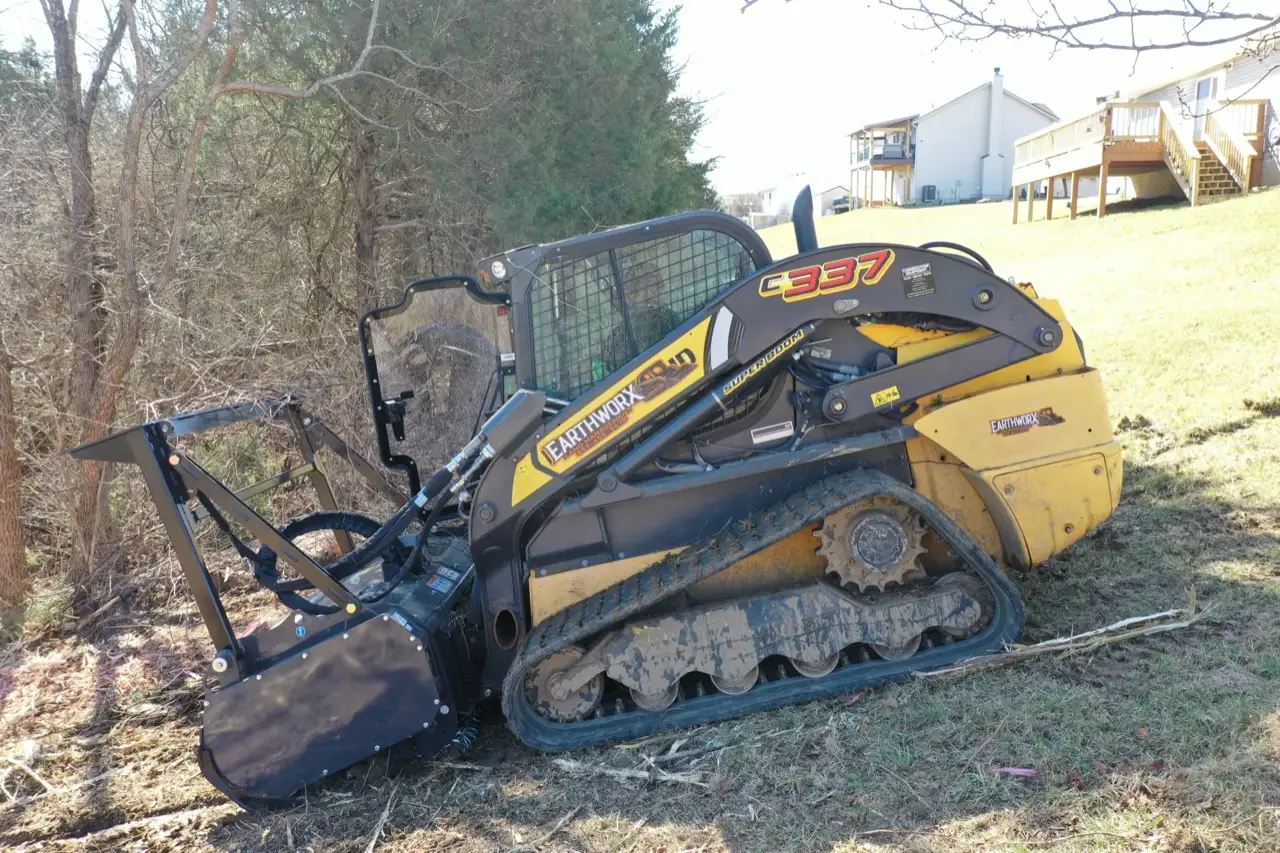
Custom home builders get the best results from land clearing companies by providing a site plan with house location, driveway, and utility routes before clearing starts. Key coordination points include tree preservation flagging, stump removal depth in the building zone, grading tolerances, and scheduling around weather. Direct communication between builder and clearing contractor prevents re-work.
Builder to Builder: How This Should Work
This one is for the custom home builders in the NKY and Cincinnati market. We work with a dozen or so builders regularly across the region, and the projects that go smoothly have one thing in common: we get on the same page early.
The projects that go sideways? Usually because we never talked to the builder until after the homeowner had already told us the wrong thing. Miscommunication is expensive for everybody.
Here's how we like to work, what we need from you, and what you can expect from us.
What We Need from You Before We Start
The single most useful thing a builder can give us is a site plan. It doesn't need to be a full engineered set. A plot plan showing:
- House footprint location and orientation
- Driveway centerline from road to garage
- Septic field location (if applicable)
- Utility trench routes
- Trees flagged for preservation
- Required setbacks
With that information, we can clear exactly what needs clearing and leave what should stay. Without it, we're either clearing too much or not enough, and someone's paying for corrections.
We've had jobs in Florence and West Chester where the builder's plan changed after we cleared. That's fine — plans change. But when the house shifts 40 feet and suddenly we need to drop trees we saved and fill in an area we already graded, that's a change order for the homeowner and nobody's happy.
Tree Preservation: Do It Right or Don't Bother
Saving trees on a home site is one of the highest-value things you can do for the finished property. But it has to be done correctly or the trees die within 2–3 years anyway.
What kills "saved" trees
- Grade changes near the root zone. Adding more than 4–6 inches of fill over roots suffocates them. Cutting grade around roots exposes and damages them. Both are common on construction sites.
- Compaction from heavy equipment. Driving a loaded concrete truck over root zones compresses the soil and kills feeder roots. The tree looks fine for a year, then starts declining.
- Trunk damage. One scrape from an excavator bucket and you've created an entry point for disease and insects.
What we do to protect keepers
We install orange construction fencing at the drip line of every keeper tree before clearing starts. The drip line — the outer edge of the canopy — marks the critical root zone. Nothing drives inside that fence. Period.
We flag keepers with surveyor's ribbon and mark them on the site plan. When the heavy equipment comes in for grading, those fences stay up. We've found that builders who are serious about tree preservation communicate this to every sub who sets foot on the site. The grading crew, the foundation crew, the concrete supplier — everyone needs to know those fences aren't suggestions.
Here's what we tell builders: a mature white oak that took 80 years to grow is worth $10,000–$20,000 to the finished home value. A $200 fence and some crew awareness is a small price to protect it.
Grading Specs: Tell Us What You Need
Different builders have different standards, and we want to hit yours the first time.
What we need to know
- Pad elevation. Are we cutting to a specific elevation or just establishing a level area? If you have an elevation benchmark, give it to us.
- Pad size. How much working room do you need around the foundation? We typically clear and grade 15–20 feet beyond the footprint on all sides. If you need more for crane access or material staging, tell us.
- Compaction requirements. Standard residential is 95% Proctor. If you're building on fill, your engineer may spec higher. We can provide compaction test documentation if your building department requires it.
- Drainage plan. Which direction does water sheet off the pad? Where do the downspout drains go? If you have a grading plan from your engineer, we'll follow it. If you don't, we'll grade to standard 2% slope away from the building pad in all directions.
- Driveway grade. Maximum slope for a residential driveway is typically 12–15%. Steeper than that and you need heated pavement or switchbacks. We've built driveways on lots in the hills above the Ohio River that pushed the limits.
Scheduling: How We Fit Together
Here's a realistic timeline for how our work and your work dovetail.
| Our Phase | Duration | Before Your Phase |
|---|---|---|
| Initial clearing/mulching | 1–3 days | Builder walkthrough |
| Stump removal | 1–2 days | Foundation excavation |
| Rough grading and pad prep | 2–4 days | Foundation pour |
| Driveway base (gravel) | 1–2 days | First material deliveries |
| Final grading | 1–2 days (after build) | Landscaping |
We can typically mobilize within 1–2 weeks of a signed contract during normal months. Spring (March–May) and fall (September–November) are our busiest periods. If you've got a project starting in April, don't call us in March expecting us to be there next week. Three to four weeks of lead time during peak season is realistic.
For builders who use us regularly, we prioritize scheduling. We know your timelines, we know your standards, and we know how to hand off a site that's ready for your crew.
What We Handle vs. What We Don't
| We Handle | We Don't Handle |
|---|---|
| Forestry mulching and brush clearing | Utility installation |
| Chainsaw felling of large trees | Foundation excavation |
| Stump grinding and removal | Retaining walls |
| Rough and finish grading | Paving or concrete |
| Gravel driveway installation | Landscaping |
| Erosion control (silt fence, seeding) | Permitting (that's your domain) |
| Drainage swale construction | French drain systems |
There's gray area between site prep and construction. Where your excavation sub starts and we end depends on the project. Some builders want us to dig the foundation trench. Some want us to just grade the pad and their excavation crew takes over. We're flexible — just tell us the handoff point.
Communication During the Job
We assign one person as the point of contact for every builder project. You call that person directly — no phone trees, no dispatchers. If something comes up on-site that doesn't match the plan, we stop and call you before making decisions.
Things that require a call:
- We find rock, old foundations, or underground structures not shown on the plan
- A tree flagged for preservation is dead, diseased, or structurally unsound
- The grade requires more cut or fill than estimated
- Weather is going to push the schedule
Things we handle without calling:
- Minor adjustments to clearing boundaries within the approved area
- Equipment changes based on ground conditions
- Normal variations in mulch depth and distribution
Pricing for Builder Projects
We price builder projects the same way we price everything — by the site conditions. But builder projects tend to be more cost-effective per acre because:
- You provide clear specs, so there's less back-and-forth
- Site plans eliminate guesswork on scope
- Repeat relationships mean we know what you expect
- Builder schedules let us plan our equipment moves more efficiently
Typical builder site prep costs for a 1–2 acre lot:
| Service | Cost Range |
|---|---|
| Clearing and mulching | $3,000–$8,000 |
| Stump removal (building zone) | $1,500–$4,000 |
| Rough grading and pad | $3,000–$8,000 |
| Gravel driveway (200 ft) | $2,500–$5,000 |
| Erosion control | $500–$1,500 |
| Typical total | $10,500–$26,500 |
For builders doing multiple lots in the same development, we offer project pricing through our commercial land clearing service. Mobilization costs spread across multiple lots, and we can schedule in blocks that are efficient for both of us. We've done subdivision prep work in Boone County and Warren County, Ohio where the per-lot site prep cost dropped 15–20% because of volume.
What Good Builders Do Differently
After working with a lot of builders over the years, the best ones do a few things consistently:
- They walk the lot with us before clearing. Not just send a plan — physically walk the site. We see things together that don't show up on paper.
- They flag keepers with paint or ribbon before we arrive. No confusion about which trees stay.
- They tell their other subs about site protections. The plumber doesn't drive through the tree protection zone because the builder communicated the rules.
- They give us realistic timelines. "I need this done yesterday" helps nobody. Two weeks of lead time helps everybody.
- They pay on time. We keep builders who pay on time at the top of the schedule. That's just how it works.
Let's Work Together
If you're a custom home builder working in Northern Kentucky, Greater Cincinnati, or SE Indiana, we'd like to be your site prep contractor. Call Bill directly at (859) 710-6107. We'll come walk your next lot and show you how we work.
We're not trying to be the cheapest. We're trying to be the crew you trust to hand you a site that's ready for your foundation without callbacks, re-work, or surprises.
Related Services
We Serve These Areas
Working with Land Clearing Companies: A Guide for Custom Home Builders FAQ
Plan for 2–4 weeks of lead time during peak season (March–May and September–November). During slower months, we can often mobilize within 1–2 weeks. Builders with recurring projects get priority scheduling.
We prefer to coordinate directly with the builder on construction projects. The builder controls the schedule and specs. We assign a single point of contact for communication and stop work to call the builder when site conditions differ from the plan.
Yes. We offer project pricing for multi-lot subdivisions. Mobilization costs spread across lots and scheduling in blocks reduces per-lot costs by 15–20%. We have done subdivision prep work in Boone County, KY and Warren County, OH.
Standard residential rough grading is within plus or minus 0.1 feet of plan elevation. We grade building pads to 2% slope for drainage unless an engineer specifies otherwise. We can provide compaction test documentation for building departments that require it.
We install orange construction fencing at the drip line of every tree flagged for preservation. Fencing stays up through the entire site prep process. No equipment operates inside the protection zone. We mark keepers on the site plan and with surveyor ribbon before clearing begins.
Ready to Get Started?
Free on-site estimates for all properties in our service area.
Ready to Clear Your Land?
Get a free, no-obligation estimate for your project. We respond fast and show up on time.
Try our cost calculator · Serving Northern Kentucky, Greater Cincinnati, and Southeast Indiana · 24/7 — Emergency Service Available