
Land Clearing in Lexington, KY: A Bluegrass & Fayette County Guide
Lexington and Fayette County sit on the Inner Bluegrass, where horse pastures, board fence lines, and cedar-choked paddocks are the land-clearing jobs that come up most. Here is how the work goes in the Bluegrass.
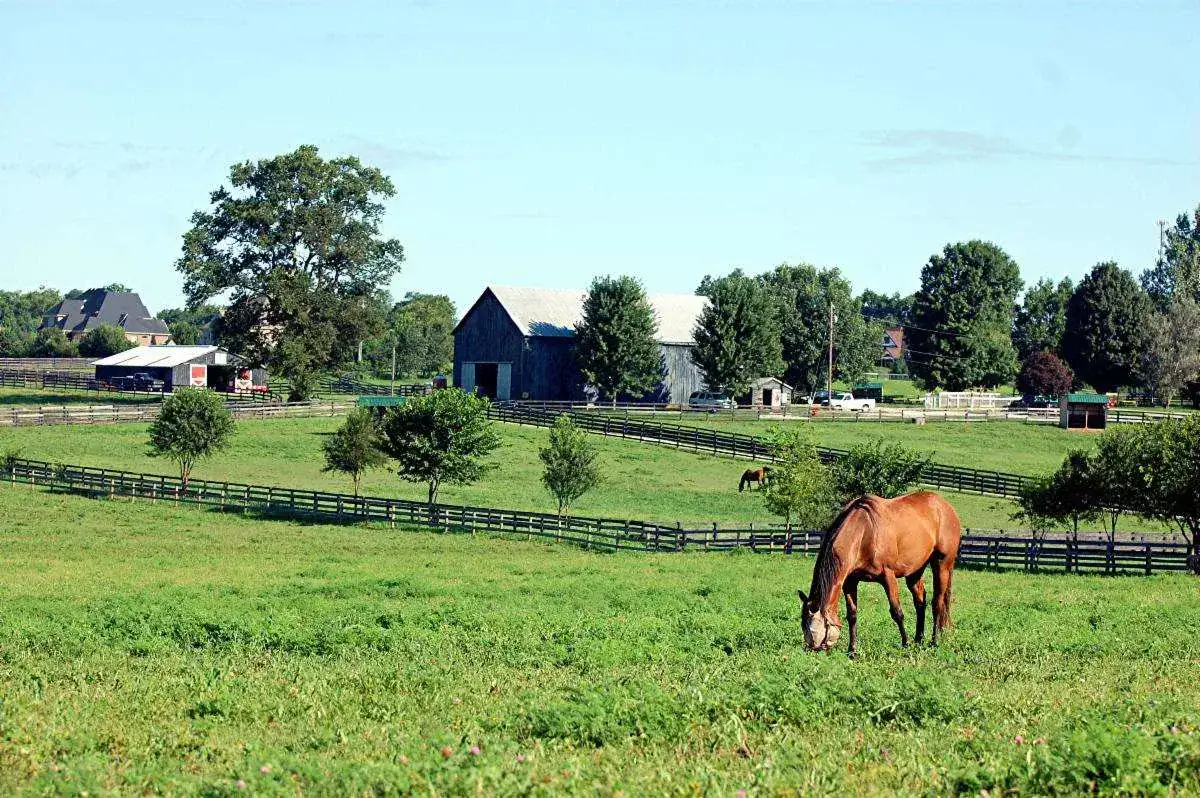
Land clearing in Lexington, KY runs roughly $1,500 to $3,800 per acre, set mainly by how thick the growth is and how much of the property you want cleared. Most Fayette County work is forestry mulching: a tracked machine grinds brush, saplings, and small trees into a chip layer on-site in one pass, with no burning and no hauling. It fits the Bluegrass well, from overgrown horse pastures and fence lines to cedar-filled paddocks and wooded building sites. Most residential lots finish in a single day.
Need this handled on your property? Free on-site estimate.
Why Land Clearing in Lexington Looks Different
Lexington is horse country, and that changes the kind of clearing work we do here. Fayette County sits on the Inner Bluegrass, a stretch of gently rolling ground over limestone that grows some of the best pasture in the country. Between the farms and the subdivisions pushing out past Man o' War, you get a steady mix of open paddock that has grown up in brush, wooded fence lines, and back parcels that nobody has touched in years.
That ground is a good match for forestry mulching. On rolling pasture and along a fence row, a tracked mulcher clears the growth and leaves the soil and the sod underneath it intact, which matters when the goal is usable grazing ground and not a scraped-off building pad. We are based in Demossville, north of Lexington off I-75, and we run Fayette County and the surrounding Bluegrass counties as part of our Kentucky route.
The other thing about clearing land around Lexington is what grows here. Eastern red cedar and bush honeysuckle take over neglected pasture faster than almost anything else in the state, and once a fence line or paddock corner fills in with them, hand-cutting is a losing battle. More on both below.
How Much Does Land Clearing Cost in Lexington, KY?
Two things set the price on any Lexington job: how dense the growth is and how much of the property you actually want cleared. A few acres of light brush on open pasture goes quick. A woven-together stand of mature cedar and woody honeysuckle takes real time. Here is what the work generally runs around Lexington and the rest of Fayette County:
| Property Type | Terrain & Growth | Typical Cost |
|---|---|---|
| Small residential lot (under 1/2 acre) | Light to moderate brush | $1,500–$2,600 |
| Pasture or wooded acreage | Moderate growth, rolling ground | $1,800–$3,200 per acre |
| Heavy or neglected land | Thick cedar, woody honeysuckle | $3,000–$3,800+ per acre |
Those are honest working numbers, not a teaser rate. What pushes a Fayette County job toward the high end is predictable: a paddock that has gone to a solid cedar thicket, a fence line grown into a woody hedge, or a back parcel where the access is tight. What brings it down is open ground, lighter brush, and a spot where we can back the trailer right up to the work. For a fuller look at what moves the number, our guide on land clearing cost per acre in Kentucky breaks it down.
We give a firm quote after we walk the property, never an hourly rate with the meter running. You will know the number before the machine ever comes off the trailer.
Forestry Mulching vs. Traditional Land Clearing in the Bluegrass
Land clearing is the broad term. Forestry mulching is one method of doing it, and around Lexington it is usually the right one. A single tracked machine runs a rotating drum of carbide teeth that grinds standing brush, saplings, and small trees into wood chips right where they stood. There is no separate cutting crew, no chipper parked in the drive, and no brush pile to burn or haul off.
Traditional clearing means cut, pile, and haul, and sometimes a dozer scraping the ground down to dirt. On a building lot that has to be graded anyway, that can make sense. On Bluegrass pasture it usually does not, because scraping strips the topsoil and sod you are trying to keep, and it leaves bare ground that erodes and grows weeds. Mulching leaves the chips down as a layer that holds moisture and breaks into the soil over a season or two. If you want the side-by-side, our comparison of forestry mulching versus bulldozing lays out where each one earns its keep.
Which Lexington-Area Properties Need Clearing Most?
The calls around Fayette County are not all the same, but a few kinds come up over and over.
Horse Farms and Overgrown Paddocks
This is the Bluegrass, so a lot of what we clear is tied to horses. A paddock that has sat empty grows up in cedar and brush fast, and a wooded corner eats into grazing ground you are paying taxes on. We can open a paddock back up to grass without tearing up the field, and we handle the same work as full pasture reclamation when a whole field needs to come back. Our guide on clearing land for horse property walks through the details.
Fence Lines and Board Fence
Fayette County runs on fence. Miles of it, and the base of a fence line is where the brush wins first, growing up into the boards and shading the wire. A mulcher runs a fence line clean in a fraction of the time it takes by hand, and it does the same for the wooded edge of a field starting to grow in. Our guide to fence row clearing on Kentucky farms covers how we handle it.
Wooded Lots and Building Sites
Out past the urban edge, toward Athens, Walnut Hill, and the county line, plenty of owners are sitting on a wooded parcel they would like to use, whether that means a home site, a barn pad, or just a cleared spot with a view. A mulcher opens the ground up and we can selectively clear the junk growth while leaving the mature hardwoods you actually want to keep.
Do You Need a Permit to Clear Land in Lexington, KY?
Lexington and Fayette County share one merged government, so the rules are set by Lexington-Fayette Urban County Government rather than a separate city and county. For routine brush clearing on an established lot, you usually will not need a permit. A few situations are worth a phone call first:
- Your project disturbs a larger area of soil. Land-disturbing work over a threshold size falls under Kentucky and local stormwater rules and can require an erosion-control plan. If you are clearing and grading a sizable parcel, check before you start.
- Your property runs along a creek or a sinkhole. The Bluegrass is karst country, full of springs, sinkholes, and streams that feed the aquifer. Clearing right up to a drain or a stream bank carries setback and water-quality considerations you do not want to guess at.
- Your parcel sits inside the Urban Service Area versus the rural county. Lexington draws a line between its Urban Service Area and the Rural Service Area, and what applies can differ depending on which side your address falls on.
We are glad to point you in the right direction during the estimate, but the rules come from LFUCG, not from us, so the safe move is always to confirm first. And wherever the property sits, call 8-1-1 to have underground utilities marked before any digging. That part is free, and it is not optional.
When Is the Best Time to Clear Land in Fayette County?
Late fall through early spring is the sweet spot. The leaves are down, so the operator can read the ground and whatever is sitting in it, the snakes are dormant, and cooler, firmer ground carries the machine better. Winter also catches honeysuckle green and standing while the rest of the woods is bare, which makes it easy to find and treat.
The Bluegrass drains fairly well on its limestone base, but it still gets soft after a long, wet spell, and Fayette County clay can hold water in the low spots. After heavy rain we will sometimes push a job back a day or two to let the ground firm up, which is easier on your pasture and on the machine. Summer clearing works fine; the growth is just at its thickest, so a dense lot might want a second pass.
What About Cedar and Honeysuckle?
These two are the reason a lot of Fayette County pasture stops being pasture. Eastern red cedar is native, but with nothing to check it, it marches across an idle field until the grass is gone. Bush honeysuckle is the other one: it leafs out before everything else in spring, holds its leaves late into fall, and forms a shoulder-high wall that shades out the grass and native seedlings underneath.
Mulching knocks both down fast in a single pass. The catch is that honeysuckle resprouts from the roots if it is only cut, so cutting alone does not finish the job. For a result that lasts, we pair mulching with targeted invasive species removal, treating the cut stumps so the stand does not come roaring back the next season. Our honeysuckle removal guide lays out the full approach, and the same plan works on Bluegrass ground.
Getting Started in Lexington
We serve Lexington and Fayette County as part of our Kentucky route, along with neighboring Georgetown and Scott County just to the north. Whether you have a paddock that has gone to cedar, a fence line grown into a hedge, or a wooded parcel you would like to put back to use, the first step is a look at the property.
Call (859) 710-6107 or request a free estimate online. We will come out, walk the ground with you, and give you a straight number based on what is actually there.
Sources & References
- Call 811 Before You Dig — Kentucky 811
- Building Inspection & Permits — Lexington-Fayette Urban County Government
- Eastern Red Cedar and Bush Honeysuckle Management — University of Kentucky Cooperative Extension Service
We Serve These Areas
Related Articles
Forestry Mulching vs. Traditional Land Clearing: Which Is Better for Your Property?
A head-to-head comparison of forestry mulching and traditional land clearing. We break down cost, speed, soil impact, and which method wins for different property types.
8 min read readForestry Mulching vs. Bulldozing: Cost, Speed, and Results Compared
A direct comparison of forestry mulching and bulldozing for land clearing. Costs, timelines, soil damage, and honest advice on which method fits your project.
7 min read readForestry Mulching vs. Brush Hogging: When to Use Each Method
Brush hogging and forestry mulching handle different problems. Here is when each method makes sense, what they cost, and where one clearly beats the other.
6 min read readLand Clearing in Lexington, KY: A Bluegrass & Fayette County Guide FAQ
Yes. Lexington and the rest of Fayette County are part of our Kentucky service area, along with Georgetown and Scott County to the north. We are based in Demossville, off I-75, and run the Bluegrass on a regular route.
Most Fayette County jobs run about $1,500 to $3,800 per acre. Light brush on open pasture falls at the lower end, while neglected ground thick with cedar and woody honeysuckle reaches the higher end. We give a firm quote after walking the property.
Land clearing is the broad term for removing brush and trees. Forestry mulching is one method of doing it: a tracked machine grinds the growth into a chip layer on-site in a single pass, leaving the soil and sod intact. Traditional clearing often means cutting, piling, and hauling, and sometimes scraping the ground with a dozer. For Bluegrass pasture and fence lines, mulching is usually the better fit.
A routine residential lot usually does not require one, but larger land-disturbing projects can fall under local stormwater rules, and clearing near a creek or sinkhole in the karst Bluegrass carries setback considerations. Rules can also differ between the Urban Service Area and the rural county. Confirm with Lexington-Fayette Urban County Government before a large clearing, and always call 8-1-1 for utility marking.
Yes. A tracked mulcher grinds eastern red cedar and brush into a chip layer without scraping the field, which lets the grass come back. For woody honeysuckle mixed in, we pair mulching with cut-stump treatment so it does not resprout the following season.
Ready to Get Started?
Free on-site estimates for all properties in our service area.
Ready to Clear Your Land?
Get a free, no-obligation estimate for your project. We respond fast and show up on time.
Try our cost calculator · Serving Northern Kentucky, Greater Cincinnati, and Southeast Indiana · 24/7 — Emergency Service Available