
Overgrown Property Cleanup: Transform Your Land in One Day
Staring at a property that looks more like a jungle than a yard? Here's exactly what happens when you finally tackle it — and why it takes hours, not weeks.
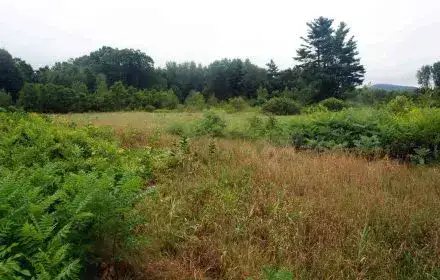
Overgrown property cleanup typically costs $800–$3,000 depending on lot size, vegetation density, and terrain. Forestry mulching clears brush, saplings, and small trees in a single pass, grinding everything into a natural mulch layer that stays on-site. Most residential lots under two acres can be fully cleared in one day.
We Know What You're Looking At
You're standing at your back door. Maybe it's the house you just inherited. Maybe it's a rental you finally got back from tenants who let it go. Or maybe — and we hear this one a lot — it's your own property, and you just never got around to it. Three summers of "I'll deal with it next weekend" turned into a thicket you can't walk through without boots and a machete.
We get it. Life happens. Work is busy. The weed growth doesn't care about your schedule.
The most overgrown lot we ever cleared was a 2-acre property in Covington that hadn't been touched since 1998. The previous owner had passed away, and the family hired us after the city sent its third code enforcement letter. Twenty-plus years of unchecked growth had produced trees growing through a chain-link fence, honeysuckle mounds six feet tall, and a shed you couldn't even see from the road. We had the whole thing cleared by sundown.
That's an extreme case. Yours might not be nearly that bad. But the feeling is the same — you look at it and have no idea where to start. This guide is for you.
Why Overgrown Properties Get Worse, Not Better
Here's the thing people don't realize about vegetation: it accelerates. Year one, you've got tall grass and some weeds. Year two, woody stems start poking up — autumn olive, bush honeysuckle, tree-of-heaven. By year three, those stems are six to ten feet tall and starting to shade out the ground, which actually changes what can grow underneath them.
By year five, you don't have an overgrown yard. You have a young forest.
And that young forest is almost certainly dominated by invasive species. In Northern Kentucky and the Cincinnati area, the usual suspects are:
- Bush honeysuckle — grows fast, leafs out early, chokes out everything native
- Autumn olive — thorny, dense, spreads by birds eating the berries
- Tree-of-heaven — the ailanthus tree, grows anywhere, smells terrible when cut
- Bradford pear — yes, the ornamental tree from every 1990s subdivision, now feral
- Multiflora rose — the thorny nightmare that grabs your clothing and won't let go
None of these are going to die on their own. A hard winter won't kill them. They're adapted to exactly this climate. Every year you wait, the root systems get deeper and the trunks get thicker.
The DIY Reality Check
Let's be honest about what you can and can't do yourself.
If your overgrown area is under a quarter acre and it's mostly tall grass and weeds with a few small bushes, you can probably handle it with a heavy-duty string trimmer, a brush blade attachment, and a long weekend. Rent a walk-behind brush mower from your local equipment rental place — they run about $200 a day. That'll knock down anything under about an inch in diameter.
But here's where DIY falls apart:
- Stems over 2 inches thick — a brush mower won't cut them, and a chainsaw means you're now hauling logs
- Thorny species — multiflora rose will eat through regular work gloves and leave you bleeding
- Terrain — slopes, ditches, or rocky ground make walk-behind equipment dangerous
- Volume — even if you can cut it all, where does it go? A half-acre of brush fills a 30-yard dumpster fast
If you can still see dirt between the plants, it's probably a DIY job. If you can't see what's on the ground at all, that's when you call somebody.
The tipping point we see most often is when people spend two full weekends cutting and piling brush, realize they've cleared maybe a tenth of the property, and their back hurts. That's usually when the phone rings.
What Actually Happens on Clearing Day
Here's what the process looks like when we show up. No mystery, no upselling, just the sequence of events.
The Walk-Through (15–30 Minutes)
We walk the property with you before we start anything. This isn't a formality — we're looking for things that could cause problems. Old well caps, buried debris, utility markers, fence posts hidden in the brush. If there's a septic system, we need to know roughly where the tank and leach field are. We'll also flag any trees you want to keep. Just point and we'll mark them with ribbon.
Equipment Setup (15–20 Minutes)
We run a forestry mulching head on a tracked skid steer or compact track loader depending on the site. The mulching head is a large rotating drum with carbide teeth — think of a giant grinding wheel. It mounts to the front of the machine and can reach about 8 feet high and process material up to about 8 inches in diameter in a single pass.
On steeper ground, we use a tracked machine because it handles slopes that wheeled equipment would slide on.
The Clearing (The Main Event)
This is where people usually stand at the edge and just watch for a while. The mulching head chews through brush, saplings, and small trees and spits out a layer of wood chips and mulch directly onto the ground. No hauling. No burn piles. No chipping crew.
A half-acre of moderate overgrowth — the kind where you've got head-high brush and saplings up to four inches thick — takes roughly two to three hours. Heavier stuff with larger trees takes longer.
The machine works in lanes, similar to mowing a lawn, but much slower and more deliberate. The operator watches for obstacles and adjusts cutting height as they go. We can mulch right down to ground level or leave a couple inches of stubble if you want faster regrowth for a wildflower area.
Cleanup and Walk-Through (30 Minutes)
When the mulching is done, we do a final pass to catch any stragglers and even out the mulch layer. Then we walk the site with you again. You'll be standing on ground you probably haven't seen in years. People get pretty quiet during this part — it's a bigger change than most expect.
What It Costs (Real Numbers)
We're not going to hide the ball on pricing. Here's what overgrown property cleanup typically runs in the Northern Kentucky and Greater Cincinnati area:
| Lot Size | Vegetation Level | Typical Cost |
|---|---|---|
| Under 1/4 acre | Moderate brush | $800–$1,200 |
| 1/4 to 1/2 acre | Moderate brush | $1,200–$1,800 |
| 1/2 to 1 acre | Heavy brush & saplings | $1,800–$2,500 |
| 1 to 2 acres | Heavy brush with trees | $2,500–$3,000+ |
Factors that push the price up: steep terrain, lots of large-diameter trees, hidden debris (old cars, dumped appliances — yes, we find these), and difficult access where we have to trailer the machine a long distance from the road.
Factors that bring it down: flat ground, mostly brush with few large stems, easy access right off the driveway.
We always give a firm quote after the walk-through. No hourly billing where you're watching the clock. You'll know the number before we unload the machine.
The Mulch Layer: Your Free Finished Surface
This is something a lot of people don't think about. When the forestry mulcher processes all that vegetation, it doesn't disappear. It turns into a two- to four-inch layer of wood chip mulch spread across the entire cleared area.
That mulch layer does several useful things:
- Suppresses regrowth — seeds underneath can't get sunlight, so they don't germinate as quickly
- Holds moisture — the soil beneath stays damp, which helps the ground recover
- Prevents erosion — bare soil washes away in our Kentucky rains. Mulch doesn't.
- Looks finished — seriously, it looks like you laid mulch on purpose. Brown, even, and neat.
Some of our clients never do anything else with the cleared area. They wanted the land usable and visible, and the mulch surface does both. Walk on it, mow over it once it settles, or just leave it. Over the course of a year or two, it breaks down into the soil and enriches it.
What to Do With Your Land After Clearing
Once you can actually see your property, you get to decide what it becomes. Here's what we see people do most often:
Lawn Establishment
If you want grass, the mulch layer needs to break down first or be scraped to the side. We can do rough grading to prep for seeding. In Northern Kentucky, fall is the best seeding window — September through mid-October — so plan accordingly if clearing in spring or summer.
Fencing
A huge number of our overgrown property jobs are driven by someone wanting to fence their yard for dogs or kids. Hard to fence what you can't walk through. Once cleared, most fence companies can give you an accurate bid within a few days.
Garden or Food Plot
Cleared land with a mulch layer on decent soil is a great starting point for a large garden. You'll need to turn the mulch into the soil and amend with compost, but the hardest part — removing the brush — is already done.
Just Enjoy It
This is more common than you'd think. People just want to be able to walk their property. See what's back there. Let the kids explore. Set up a firepit. Not everything needs to be a project.
Timing and Scheduling Tips
We can clear overgrown properties any time of year, but there are a few things worth knowing:
Late fall and winter (November–March) are actually ideal. The ground is firmer when it's cold, the machine causes less rutting, and there's no leaf canopy blocking the view. Snakes are also dormant, which matters more than you'd think when wading into waist-high brush.
Spring and summer work fine too, but the ground can be soft after rain and the vegetation is at peak density. We might need an extra pass.
Avoid scheduling right after heavy rain. The mulching equipment is heavy, and saturated ground means ruts. We'll push the date a day or two if conditions warrant it — better for your property and our machine.
The busiest time for overgrown property calls is spring, when people look outside and realize winter didn't solve anything. If you can plan ahead and book for late fall or early winter, you'll have more flexibility on scheduling.
Before You Call: What to Have Ready
A few things that make the estimate faster and more accurate:
- Know your property lines. If you're not sure, pull up your county GIS map online — Pendleton County, Boone County, and Kenton County all have free parcel viewers.
- Flag anything you want to keep. Tie a piece of bright ribbon on any trees, shrubs, or landmarks you want us to work around.
- Clear the access point. We need to get a truck and trailer with heavy equipment to your property. If your driveway is narrow, let us know ahead of time.
- Check for utilities. Call 811 before any land clearing project. It's free, and it marks underground gas, electric, and water lines. We won't start without it.
That property you've been avoiding? It's not going to get easier next year. Get a free estimate — we've seen hundreds of them, and they all look the same after clearing day — open, usable, and a lot bigger than anyone remembered.
Related Services
We Serve These Areas
Overgrown Property Cleanup: Transform Your Land in One Day FAQ
Most residential lots under one acre can be cleared in a single day — typically 3 to 6 hours of machine time depending on the density of brush and vegetation. Larger properties or sites with many large trees may require a second day.
Mark any trees or features you want to keep with bright ribbon, call 811 to mark underground utilities, and ensure there is trailer access to the site. We handle everything else from there.
Our forestry mulcher grinds all vegetation into a natural wood chip mulch layer on-site. There is nothing to haul away, burn, or dispose of — the mulch stays on the ground and decomposes over time.
No. Forestry mulching is a low-impact method. The mulch layer actually protects the soil from erosion and helps retain moisture. We avoid working on saturated ground to prevent rutting.
Yes. During the walk-through before work begins, you point out any trees, shrubs, or features you want to keep and we flag them with ribbon. The operator works around them.
Ready to Get Started?
Free on-site estimates for all properties in our service area.
Ready to Clear Your Land?
Get a free, no-obligation estimate for your project. We respond fast and show up on time.
Try our cost calculator · Serving Northern Kentucky, Greater Cincinnati, and Southeast Indiana · 24/7 — Emergency Service Available