
Septic System Installation in Northern Kentucky, Cincinnati & SE Indiana
New septic systems and replacements for homes without sewer access. We handle the site evaluation, excavation, tank and lateral field installation, and final grading — serving Northern Kentucky, Greater Cincinnati, and Southeast Indiana.
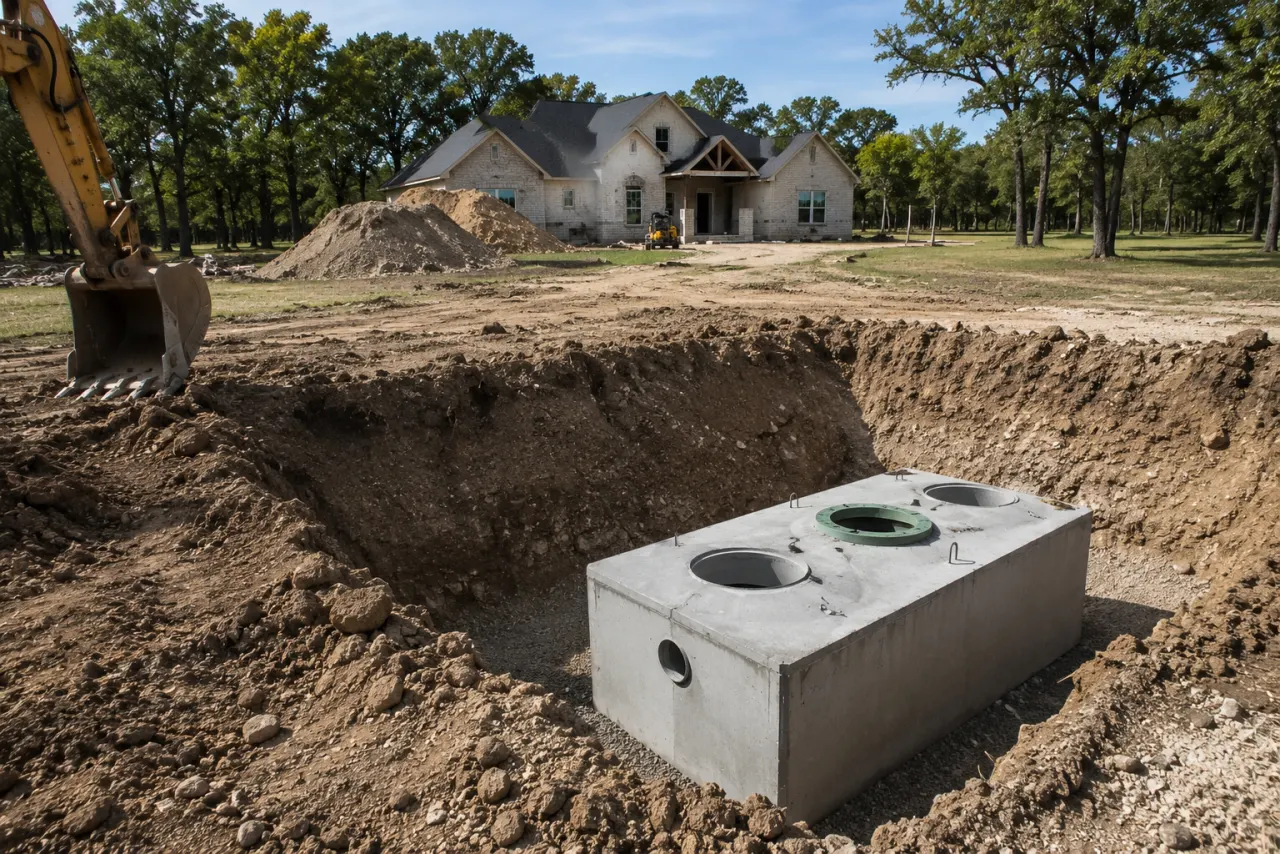
Septic system installation is the process of excavating and installing an onsite wastewater treatment system — a septic tank plus a drainfield (lateral field) — for properties without access to municipal sewer, sized to the home and designed around a soil evaluation approved by the local health department.
Septic system installation in Northern Kentucky and Cincinnati typically costs $8,000–$15,000 for a conventional system, including the tank, lateral field, excavation, and final grading. The process starts with a soil evaluation and permit through your local health department, and most installations are completed in 2–5 days once permitted.
New Septic Systems, Handled Start to Finish
If you're building outside the sewer lines — and in most of rural Northern Kentucky, Southeast Indiana, and the townships around Cincinnati, you are — you need a septic system before you can occupy your home. EarthWorx handles the whole process: the soil evaluation and health department permit, the excavation, the tank and lateral field installation, and the final grading that leaves your yard ready for seed. Because we also clear land, build driveways, and grade building pads, we're often already on your site — which means your septic install gets coordinated with the rest of your site work instead of bolted on by a separate contractor. Fully insured across Kentucky, Ohio, and Indiana.
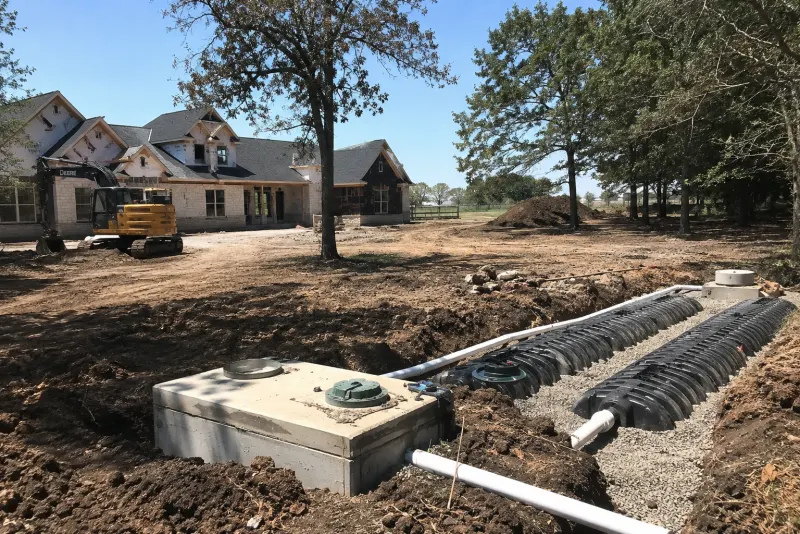

Most of our septic work happens in the same places we clear land: Pendleton, Grant, and southern Boone and Kenton counties in Kentucky, the river towns of Southeast Indiana, and the rural townships east and north of Cincinnati. Outside the incorporated cities, municipal sewer simply does not extend to most buildable land — so nearly every new home, barndominium, and cabin in our service area needs an onsite septic system. We install them as part of complete site packages and as standalone projects.
Every septic installation starts with the health department, not the backhoe. In Kentucky, your local health department — the Northern Kentucky Health Department for Boone, Campbell, Grant, and Kenton counties, or the Three Rivers District Health Department for Pendleton and the surrounding counties — performs a site evaluation of your soil before issuing an onsite sewage disposal permit. Ohio and Indiana run similar programs through their county health districts. The evaluation determines what kind of system your soil can support and how large the lateral field needs to be. We coordinate this process for you: scheduling the evaluation, submitting the permit application, and building the system to the approved design.
Soil is the variable that matters most in this region. Much of Northern Kentucky sits on heavy clay that drains slowly, which means lateral fields here often need to be larger than the national rule-of-thumb, and some sites need alternative designs — low-pressure distribution or other engineered systems — instead of a conventional gravity system. This is exactly why the soil evaluation comes first. A system designed for your actual soil conditions works for decades; a system that ignores them backs up within a few years.
The advantage of hiring a land management company for septic work is simple: one contractor, one mobilization, one finished site. A typical new-construction sequence with us runs clearing, building pad, septic system, driveway, and final grade — all with the same crew and equipment already on your property. No scheduling gaps waiting on a separate septic contractor, no second contractor tearing up the grading the first one finished, and one person to call from the first walkthrough to the final inspection.
Septic System Installation vs. Traditional Methods
| Factor | EarthWorx | Traditional |
|---|---|---|
| Contractors needed | One — clearing, excavation, septic, and grading | Two to four separate contractors to schedule |
| Scheduling | Sequenced with your site work, no gaps | Weeks of lag between separate crews |
| Site restoration | Final grade and smooth yard included | Often left rough for the next contractor |
| Permits | We coordinate the health department process | Often left to the homeowner to figure out |
| Mobilization cost | One mobilization, already on site | Each contractor charges to bring equipment |
| Accountability | One call for the entire site package | Contractors pointing at each other when issues arise |
Common Uses for Septic System Installation
- ✓New home construction on land without municipal sewer access
- ✓Replacing a failed or aging septic system on an existing home
- ✓Barndominiums, cabins, and workshops that need their own system
- ✓Home additions that increase bedroom count and require a larger system
- ✓Hunting properties and recreational land adding a cabin or bunkhouse
- ✓Upgrading an undersized system before selling a rural property
- ✓Septic tank replacement where the lateral field is still healthy
- ✓Complete site packages — clearing, pad, septic, and driveway in one project
Why Choose Septic System Installation
Permits and Paperwork Handled
We coordinate the soil evaluation and onsite sewage permit with your local health department, build to the approved design, and schedule the final inspection — you sign, we handle the rest.
One Contractor for the Whole Site
Clearing, building pad, septic, driveway, and final grade with one crew. No scheduling gaps between contractors and no one tearing up finished work to trench a sewer line.
Built for Northern Kentucky Soil
Heavy clay soils are the rule here, not the exception. We size and build lateral fields for how your ground actually drains, so the system works for decades instead of years.
Conventional and Alternative Systems
Most sites take a conventional gravity system. When the soil evaluation calls for low-pressure distribution or another engineered design, we build that too.
Clean Final Grade
A septic install should not leave your yard looking like a battlefield. We backfill, rough grade, and finish grade the disturbed area so it is ready for seed and straw when we leave.
Replacement Without the Runaround
If your existing system has failed, we diagnose whether you need a full replacement, a new tank, or lateral field repairs — and give you a straight answer with a firm number.
Our Septic System Installation Process
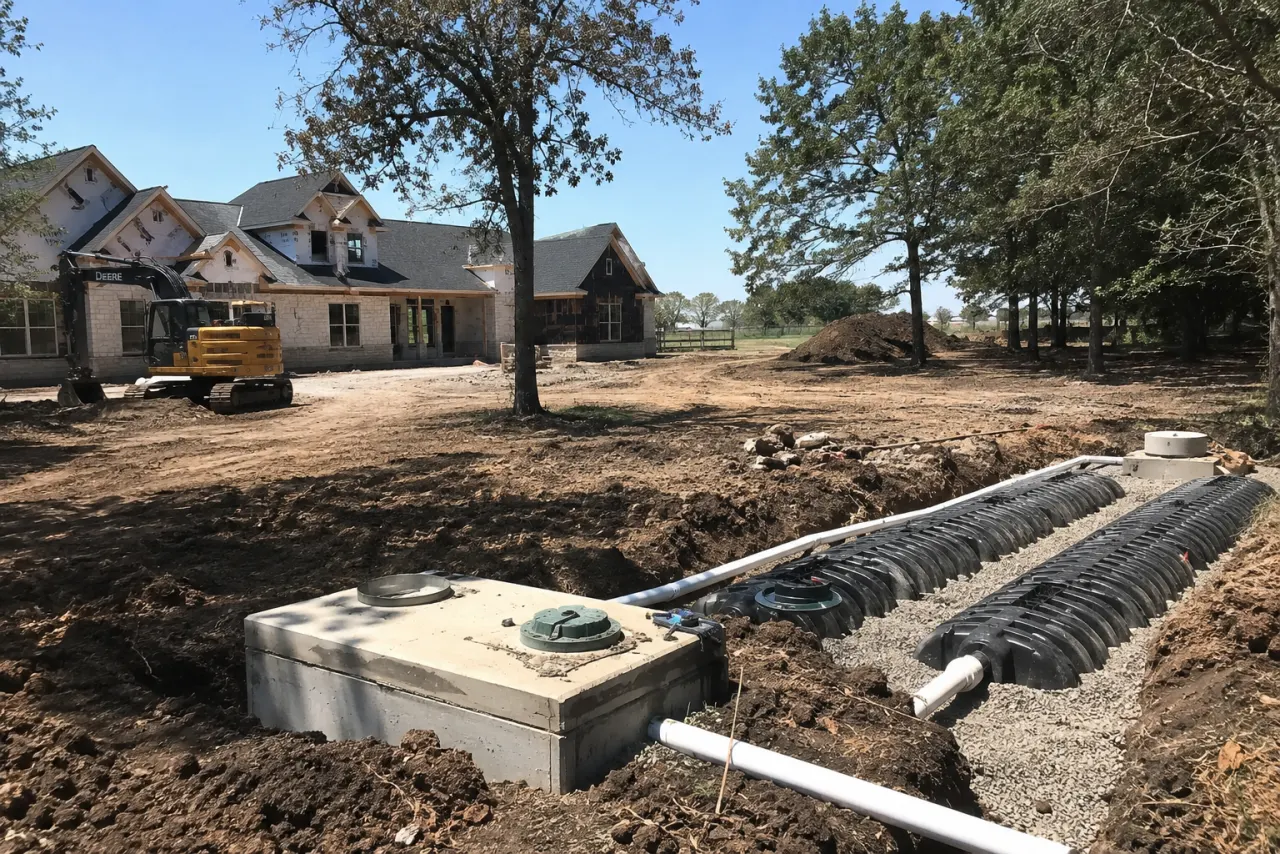
Site evaluation and permit — the local health department evaluates your soil, and we coordinate the permit application and system design based on the results.
Excavation — we excavate for the tank and lateral field lines, working around your building pad, driveway, and utilities.
Installation — the tank is set, lateral field lines and gravel are placed to the approved design, and plumbing is connected and tested.
Inspection and final grade — the health department inspects the open system, then we backfill and finish grade so the yard is ready for seed.
Typical cost: $8,000–$15,000 per system
Exact pricing depends on your property. We provide free on-site estimates.
Septic System Installation FAQ
Common questions about septic system installation in Northern Kentucky and Cincinnati.
A conventional septic system in Northern Kentucky and Cincinnati typically costs $8,000–$15,000 installed, including the tank, lateral field, excavation, and final grading. Sites with poor-draining clay soil that need larger lateral fields or alternative systems like low-pressure distribution can run higher. We give you a firm number after the soil evaluation, with a free on-site estimate.
Yes. In Kentucky, onsite sewage systems require a site evaluation and permit from your local health department — the Northern Kentucky Health Department for Boone, Campbell, Grant, and Kenton counties, or the Three Rivers District Health Department for Pendleton and surrounding counties. Ohio and Indiana have similar county-level requirements. We coordinate the entire permit process as part of the job.
The excavation and installation itself usually takes 2–5 days. The full timeline is driven by the permit process — the soil evaluation and permit approval typically add a few weeks up front, which is why we recommend starting the septic process early in your build. We handle the scheduling so it does not hold up your project.
A perc (percolation) test — formally a site or soil evaluation — measures how quickly your soil absorbs water. The health department uses it to determine whether your site can support a conventional lateral field and how large it needs to be. Every new septic system in Kentucky requires one before a permit is issued. If you're evaluating land to buy, we recommend getting the evaluation done before you close.
Systems are sized primarily by bedroom count, because bedrooms predict occupancy and water use. A typical 3-bedroom home uses a 1,000-gallon tank; larger homes need bigger tanks and longer lateral fields. If you add bedrooms later, the health department may require the system to be upgraded — tell us your long-term plans and we will size it right the first time.
Yes — that is the main reason people hire us for septic work. We clear the lot, build the pad, install the septic system, cut the driveway, and finish grade with one crew and one mobilization. You save the cost of multiple contractors mobilizing separately and avoid the scheduling gaps that stall rural builds.
The common signs: sewage odors in the yard, unusually green or soggy grass over the lateral field, slow drains throughout the house, or sewage backing up after heavy rain. Sometimes the fix is a new tank or repairs to part of the lateral field rather than a full replacement. We inspect the system and give you an honest assessment before recommending anything.
Related Services
Where We Offer Septic System Installation
Ready for Septic System Installation?
Get a free, no-obligation estimate for your septic system installation project.
Try our cost calculator · Serving Northern Kentucky, Greater Cincinnati, and Southeast Indiana · 24/7 — Emergency Service Available