
Forestry Mulching in Loveland, Ohio: A Local Guide
Loveland sits where three counties meet along the Little Miami, and the river valley grows brush faster than almost anywhere we work. Here is how forestry mulching handles it.
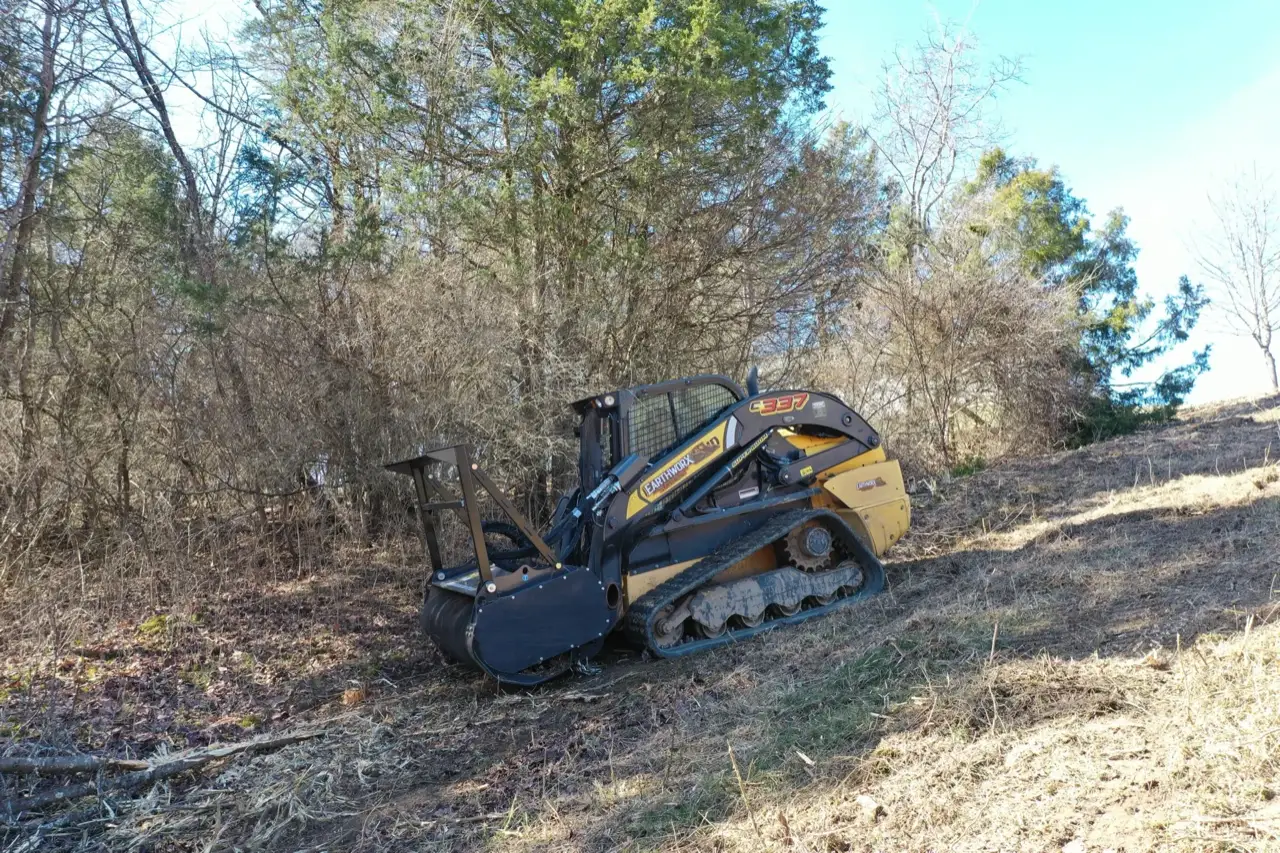
Forestry mulching in Loveland, Ohio typically runs $1,500 to $4,000 per acre, depending on terrain and how thick the growth is. A tracked mulcher grinds brush, saplings, and small trees into mulch on-site in one pass, which fits Loveland well because so much of the land here is wooded hillside or honeysuckle-choked riverfront along the Little Miami. Most residential lots clear in a single day.
Need this handled on your property? Free on-site estimate.
Why Loveland Properties Get Overgrown So Quickly
Loveland is an unusual town to work in. The city line crosses three counties — Hamilton, Clermont, and Warren — and the Little Miami River cuts right through the middle of it. That river valley is the reason so many of the calls we get from Loveland sound the same: a back lot that was open ten years ago is now a wall of green you cannot walk into.
The valley holds moisture. Mornings stay damp, the soil is rich, and the slopes catch afternoon sun. That is great for a vegetable garden and terrible for anyone trying to keep a wooded lot under control. Brush that would take five years to fill in on a dry Kentucky ridge will do it in two or three down by the river.
We are based in Demossville, Kentucky, about forty-five minutes to an hour south of most Loveland addresses, and we run the Little Miami corridor often enough that we know the ground before we get there. It is rarely flat, it is rarely clean, and there is almost always honeysuckle.
What Is Forestry Mulching, and Why Does It Suit Loveland?
Forestry mulching uses a single machine — a tracked carrier with a rotating drum of carbide teeth mounted on the front — to grind standing vegetation into a layer of wood chips right where it stood. There is no separate cutting crew, no chipper parked in the road, and no pile of brush to haul off or burn.
That one-machine approach matters more in Loveland than in a lot of places, and here is why. A big share of the lots we clear here are on a grade. Wooded hillsides running down toward the river, ravines between subdivisions, steep backyards that drop off behind the house. Hauling cut brush up a slope by hand is miserable and slow. A bulldozer scraping that same slope tears up the topsoil and leaves you with an erosion problem feeding straight into the watershed. Mulching avoids both. The chips stay on the ground and hold the soil in place.
Our tracked machine handles slopes up to roughly 35 degrees, which covers nearly everything in the Loveland area short of an actual cliff. On the flat riverbottom lots it works just as well, just faster.
How Much Does Forestry Mulching Cost in Loveland?
Pricing comes down to two things: how steep the ground is and how dense the growth is. A flat lot of light brush is quick. A hillside packed with mature honeysuckle and six-inch saplings takes real time. Here is what the work generally runs around Loveland and the rest of Greater Cincinnati:
| Property Type | Terrain & Growth | Typical Cost |
|---|---|---|
| Small residential lot (under 1/2 acre) | Light to moderate brush | $1,500–$2,800 |
| Wooded acreage | Moderate growth, gentle slope | $2,000–$3,500 per acre |
| Riverfront or hillside lot | Heavy honeysuckle, steep grade | $3,000–$4,000+ per acre |
Those are honest working numbers, not a teaser rate. The things that push a Loveland job toward the high end are predictable: a steep drop toward the river, a lot that has not been touched in fifteen years, or an access point where we have to trailer the machine a long way in from the street. The things that bring it down are flat ground, a thinner stand of brush, and a driveway we can back the trailer right up to.
We give a firm quote after we walk the property, never an hourly rate with the meter running. You will know the number before the machine comes off the trailer.
Which Loveland Properties Benefit Most?
Not every job is the same, but a few types come up again and again in this part of Hamilton, Clermont, and Warren County.
Riverfront and Floodplain Lots
Land near the Little Miami is some of the most overgrown we see. The floodplain drops seeds every time the water comes up, and honeysuckle takes hold faster than anything native can. Mulching opens these lots back up without leaving bare, washable soil behind, which matters a great deal this close to a protected river.
Wooded Hillsides Behind Homes
Plenty of Loveland subdivisions back up to a tree line on a slope. Homeowners want the view and the usable space, but the understory has turned into a thicket. We can selectively clear the brush and small junk trees while leaving the mature hardwoods you actually want, which keeps the canopy and kills the mess underneath it.
Trails and Recreational Acreage
With the Little Miami Scenic Trail running through town, a lot of people here think about access — a path down to the water, a loop through their own woods, a cleared spot for a fire pit. A mulcher cuts a clean trail in an afternoon and leaves a soft chip surface you can walk on the same day.
Do You Need a Permit to Clear Land in Loveland?
This is the question that trips people up in Loveland more than anywhere else we work, and it is because of those three county lines and the river.
For a normal residential lot well away from the water, small-scale brush clearing usually does not require a permit. But two situations call for a phone call before anyone starts a machine:
- You are inside Loveland city limits. Check with the City of Loveland on tree and land-disturbance rules for your parcel, since the city ordinance can differ from the surrounding township.
- You are near the Little Miami. The Little Miami is a State and National Scenic River, and there are riparian setback and floodplain considerations along it. Clearing right up to the bank is not something to do on assumption. Confirm what is allowed before you remove anything in that zone.
We are happy to point you in the right direction during the estimate, but the rules are set by your county and the city, not by us. The safe move is always to confirm first. And no matter where the lot sits, call 8-1-1 to have underground utilities marked. That part is free and it is not optional.
When Is the Best Time to Mulch in the Little Miami Valley?
Late fall through early spring is the sweet spot here. The leaves are down so the operator can see the ground and the obstacles in it, the snakes are dormant, and cooler ground holds the machine better on a slope.
The valley does throw one wrinkle at you. The soil down here stays wet, and saturated ground on a grade means ruts and torn-up turf. After a heavy rain we will often push a Loveland job back a day or two to let the slope firm up. It is better for your property and easier on the machine. We can mulch in summer without any trouble — the growth is just at its thickest, so a dense lot might need a second pass.
What About the Honeysuckle?
If you own land in Loveland, you already know bush honeysuckle. It leafs out before everything else in spring, holds its leaves late into fall, and forms a shoulder-high screen that shades out every native seedling underneath it. The Little Miami corridor is one of the worst pockets of it in southwest Ohio.
Mulching knocks honeysuckle down fast, but cutting alone does not kill it — the roots resprout. For a lasting result we pair mulching with targeted invasive species removal, treating the cut stumps so the stand does not come roaring back the next season. We walk through the full approach in our honeysuckle removal guide, and the same plan applies on the Ohio side of the river.
Getting Started in Loveland
We serve Loveland and the surrounding Greater Cincinnati area as part of our regular route. If you have a lot that has gotten away from you — a honeysuckle-choked riverfront, a wooded hillside, or just a back acre you would like to walk again — the first step is a look at the property.
Call (859) 710-6107 or request a free estimate online. We will come out, walk the ground with you, and give you a straight number based on what is actually there.
Sources & References
- Call 811 Before You Dig — Ohio Utilities Protection Service
- Little Miami State & National Scenic River — Ohio Department of Natural Resources
Related Services
We Serve These Areas
Related Articles
Forestry Mulching vs. Traditional Land Clearing: Which Is Better for Your Property?
A head-to-head comparison of forestry mulching and traditional land clearing. We break down cost, speed, soil impact, and which method wins for different property types.
8 min read readForestry Mulching vs. Bulldozing: Cost, Speed, and Results Compared
A direct comparison of forestry mulching and bulldozing for land clearing. Costs, timelines, soil damage, and honest advice on which method fits your project.
7 min read readForestry Mulching vs. Brush Hogging: When to Use Each Method
Brush hogging and forestry mulching handle different problems. Here is when each method makes sense, what they cost, and where one clearly beats the other.
6 min read readForestry Mulching in Loveland, Ohio: A Local Guide FAQ
Yes. Loveland is part of our regular Greater Cincinnati service area. We are based in Demossville, Kentucky, about 45 minutes to an hour from most Loveland addresses, and we run the Little Miami corridor often.
Most Loveland jobs run $1,500 to $4,000 per acre. Small flat residential lots fall at the lower end, while steep riverfront or hillside lots packed with mature honeysuckle reach the higher end. We give a firm quote after walking the property.
Yes. Our tracked mulcher is built for grade and handles slopes up to about 35 degrees, which covers nearly all of the hillside lots in the Little Miami valley. Mulching also leaves the soil protected, which is important on a slope feeding toward the river.
A standard residential lot away from the water usually does not require one, but Loveland crosses three counties and sits on the Little Miami State and National Scenic River. Check with the City of Loveland and your county before clearing inside city limits or near the river, and always call 8-1-1 for utility marking.
Mulching removes the standing growth in one pass, but honeysuckle resprouts from the roots if it is only cut. For a lasting result we pair mulching with cut-stump treatment so the stand does not return the following season.
Ready to Get Started?
Free on-site estimates for all properties in our service area.
Ready to Clear Your Land?
Get a free, no-obligation estimate for your project. We respond fast and show up on time.
Try our cost calculator · Serving Northern Kentucky, Greater Cincinnati, and Southeast Indiana · 24/7 — Emergency Service Available