
How to Choose a Land Clearing Company in Northern Kentucky
Three quotes hundreds of dollars apart and no idea who to trust? Here is how to choose a land clearing company in Northern Kentucky — the insurance to verify, the questions to ask, the red flags to walk away from, and what the work should actually cost.
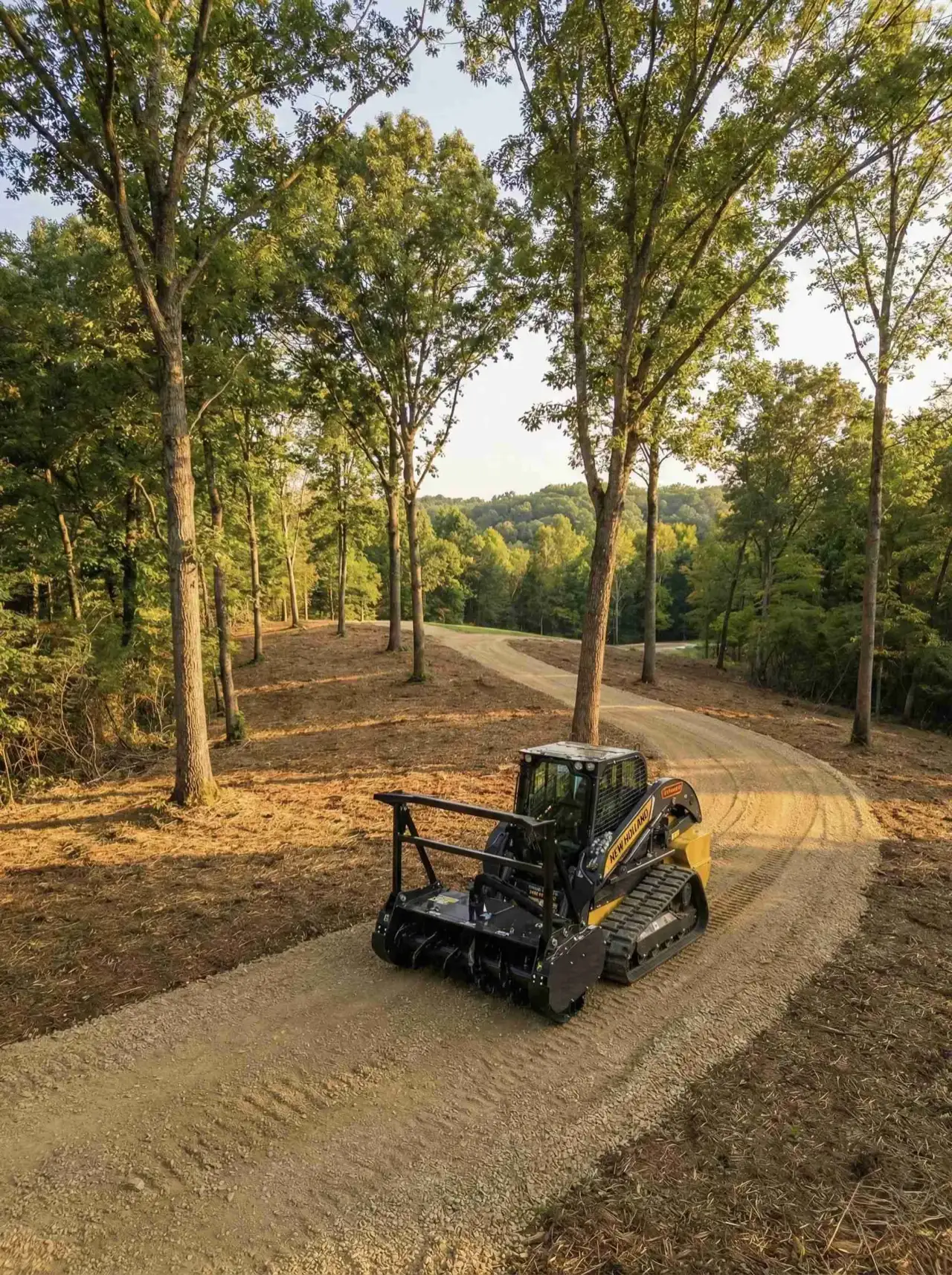
To choose a land clearing company in Northern Kentucky, verify the contractor carries general liability and workers' compensation insurance, ask for an on-site estimate instead of a phone quote, and confirm they own equipment matched to your terrain. Check that they handle local grading and stormwater rules, read recent local reviews, and get the full scope in writing before any work starts.
Need this handled on your property? Free on-site estimate.
Picking a land clearing company shouldn't feel like a gamble, but for a lot of property owners around Northern Kentucky it does. You get three quotes that are hundreds of dollars apart, half the guys never show up to look at the property, and you're left guessing who actually knows what they're doing. I'm Bill, and I've run land clearing and forestry mulching jobs across Boone, Kenton, and Campbell counties long enough to tell you what separates a contractor worth hiring from one who'll leave you with a torn-up lot and a surprise invoice.
How Do You Choose a Land Clearing Company in Northern Kentucky?
Choose a land clearing company by checking three things in order: insurance, equipment, and a written scope. A legitimate contractor carries general liability and workers' compensation coverage, owns equipment matched to your terrain, and will walk your property before quoting a price. Everything else — reviews, references, how fast they answer the phone — matters, but those three are what protect you if a job goes sideways.
Most of the bad outcomes I get called in to fix trace back to skipping one of those steps. Someone hired the cheapest number off a text message, the contractor showed up with a rented mini machine that couldn't handle a wet Kentucky hillside, and the job either stalled or got abandoned half-finished. Slowing down for one afternoon of vetting saves that headache.
What Should a Land Clearing Company Be Able to Show You?
Before you talk price, ask for proof of a few basics. A real land clearing outfit will have these ready without hesitating:
- General liability insurance. If a falling tree hits your neighbor's fence or a rock cracks a windshield, this covers it. Ask for a certificate with your name on it, not a screenshot from two years ago.
- Workers' compensation. If a worker gets hurt on your property and the company doesn't carry comp, the liability can land on you. This is the one most people forget to ask about.
- Owned equipment, not rented. Companies that own their machines show up on schedule and don't disappear when the rental is due back. Ask what they're bringing and whether it's theirs.
- Recent local references. Not a testimonial page — actual jobs in Boone, Kenton, or Campbell County from the last few months that you could drive past.
What Questions Should You Ask a Land Clearing Contractor?
Ask these five questions on the first call or site visit. The answers tell you more than any review ever will:
- What equipment will you bring for my property? A flat half-acre and a steep, wooded hillside need different machines. If the answer is vague, they haven't thought about your specific job.
- Do you mulch on-site or haul debris away? Forestry mulching grinds material where it stands and leaves it as ground cover. Hauling means dump fees and more truck trips. Both are valid — you just want to know which one you are paying for.
- Who handles permits and stormwater rules? Larger clearing jobs in Northern Kentucky counties can trigger grading or erosion-control requirements. A pro knows this; a guy with a rented machine usually does not.
- What does the property look like when you're done? Stumps ground or left? Mulch spread or piled? Get the finished condition in writing so "cleared" means the same thing to both of you.
- What's your timeline, and what happens if it rains? Our clay soil holds water. An honest contractor builds weather into the schedule instead of promising a date they can't keep.
How Do You Spot a Bad Land Clearing Company?
The warning signs are usually obvious once you know to look. Walk away if you see these:
- A firm price without seeing the property. Nobody can quote acreage they have not looked at. A number over the phone is a guess, not a quote.
- No proof of insurance, or excuses about it. "I have never needed it" is not an answer. It means you would be the one who needs it.
- Pressure to pay a large deposit up front. A small mobilization fee can be normal. Half the job in cash before they start is a red flag.
- No written scope. If it's not in writing, it's not promised. Verbal deals are where the "I thought that was included" arguments live.
Honest take: the cheapest quote almost always becomes the most expensive one. I've lost bids by a few hundred dollars to someone who underpriced the job, then watched that property owner call me back six weeks later to finish — or fix — what got left behind. You end up paying twice. Price the job right the first time and it gets done once.
Why Does Local Experience Matter for Land Clearing Here?
Northern Kentucky and the Greater Cincinnati area throw a few specific things at clearing crews, and a contractor who works here every week already knows them. Out-of-town operators learn them the hard way, on your dime.
The terrain is the big one. A lot of Boone and Kenton County properties sit on rolling hills with heavy clay soil that turns to soup after rain. The right machine — a tracked carrier with the weight and flotation to climb a wet slope — handles it. A rented skid steer spins out and tears ruts. We also see honeysuckle, autumn olive, and multiflora rose on nearly every overgrown lot in the region, and clearing those without a plan just invites them back thicker next spring. That is where invasive species removal done right earns its keep.
Then there are the rules. Depending on the county and how much ground you are disturbing, you may need a grading permit or have to follow stormwater and erosion-control requirements. A local contractor working in Boone County or Cincinnati knows when those apply and keeps you out of trouble with the county.
How Much Should Land Clearing Cost Around Cincinnati and NKY?
Pricing depends on density, terrain, and how the debris gets handled, but here's a realistic range for the kind of work we do across the region. Use it to sanity-check the quotes you get — anything far below the low end usually means something is missing from the scope.
| Project type | Typical size | Realistic range |
|---|---|---|
| Light brush / overgrown yard | Under 1 acre | $1,200 – $3,000 |
| Wooded residential lot | 1–2 acres | $3,000 – $7,000 |
| Fence line or trail clearing | Per project | $1,500 – $4,500 |
| Pasture or field reclamation | 2–5 acres | $5,000 – $15,000 |
Those are forestry-mulching and selective-clearing numbers, not full excavation with stump removal and haul-off, which runs higher. For a closer look at what moves the price up or down on a typical job, our residential lot clearing page breaks it down.
Should You Hire the Cheapest Land Clearing Company?
No — and not because cheap is always bad, but because the lowest bid usually means the contractor either missed part of the scope or plans to cut a corner you will notice later. The smarter move is to throw out the highest and lowest quotes and look hard at the middle. Ask each contractor to spell out what is included so you are comparing the same work. When two quotes are close, go with the one who showed up, walked the property, and answered your questions straight.
How to Get a Straight Estimate
Get at least two on-site estimates, not phone quotes, and ask each contractor the five questions above. If you're anywhere across Northern Kentucky, Greater Cincinnati, or Southeast Indiana, we'll come look at your property, tell you honestly what it needs, and put the full scope in writing before any machine touches the ground. You can request a free estimate and we'll get you on the schedule.
Related Services
We Serve These Areas
Related Articles
Forestry Mulching vs. Traditional Land Clearing: Which Is Better for Your Property?
A head-to-head comparison of forestry mulching and traditional land clearing. We break down cost, speed, soil impact, and which method wins for different property types.
8 min read readForestry Mulching vs. Bulldozing: Cost, Speed, and Results Compared
A direct comparison of forestry mulching and bulldozing for land clearing. Costs, timelines, soil damage, and honest advice on which method fits your project.
7 min read readForestry Mulching vs. Brush Hogging: When to Use Each Method
Brush hogging and forestry mulching handle different problems. Here is when each method makes sense, what they cost, and where one clearly beats the other.
6 min read readHow to Choose a Land Clearing Company in Northern Kentucky FAQ
Ask for a current certificate of insurance listing both general liability and workers' compensation, with your name added as the certificate holder. A legitimate contractor can have their insurer email it to you the same day. If a company stalls, makes excuses, or sends an old screenshot, treat that as your answer and move on.
Yes. Any contractor giving a firm price without walking your property is guessing. Density, slope, soil, and access all change the cost, and none of that shows up over the phone. Expect an on-site visit before a real number — it usually takes 20 to 30 minutes.
It depends on the county and how much ground you are disturbing. Smaller forestry-mulching jobs often do not, but larger clearing can trigger grading permits or stormwater and erosion-control rules. A local contractor will know when those apply. Our guide on whether you <a href="/blog/do-i-need-a-permit-to-clear-land-kentucky/">need a permit to clear land in Kentucky</a> covers the details, and we handle the requirements as part of the job.
Most overgrown residential lots up to an acre get cleared in a single day with forestry mulching, assuming dry conditions. Heavier woods, steep terrain, or wet clay soil can push it to two days. A contractor who knows local ground gives you a timeline that accounts for weather instead of a best-case promise.
Forestry mulching is one method of land clearing — a machine grinds trees and brush into mulch on-site, with no burning or hauling. "Land clearing" is the broader category that also includes bulldozing, excavation, and stump removal. Most full-service contractors, us included, offer both and recommend the method that fits your property and budget.
Ready to Get Started?
Free on-site estimates for all properties in our service area.
Ready to Clear Your Land?
Get a free, no-obligation estimate for your project. We respond fast and show up on time.
Try our cost calculator · Serving Northern Kentucky, Greater Cincinnati, and Southeast Indiana · 24/7 — Emergency Service Available