
Clearing Land for Food Plots: A Northern Kentucky Landowner’s Guide
The part that makes or breaks a food plot happens before you ever buy seed — clearing the right spot the right way. Here is how we clear land for food plots on tri-state whitetail ground.
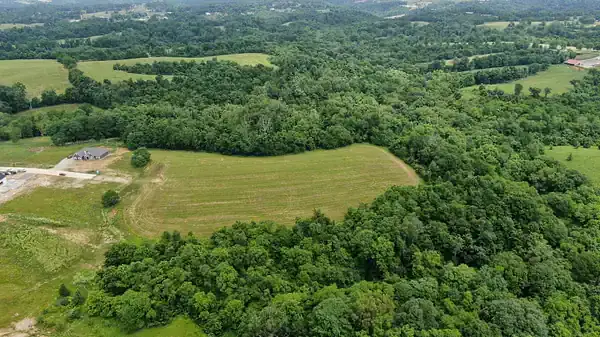
Clearing land for a food plot means removing the trees, brush, and invasive growth from a chosen spot so you can plant deer forage. In Northern Kentucky, Greater Cincinnati, and Southeast Indiana, forestry mulching is the fastest way to do it: a mulching machine grinds standing brush into a mulch layer in one pass, with no burn piles and no hauling. Expect to spend roughly $1,500–$4,500 per acre depending on how heavy the growth is, and clear a fall plot by mid-to-late July so the ground settles before you plant.
Need this handled on your property? Free on-site estimate.
Every fall, landowners across Northern Kentucky, Greater Cincinnati, and Southeast Indiana ask the same thing: how do I turn this overgrown corner of my property into a food plot the deer will actually use? The planting gets all the attention online, but the part that makes or breaks a plot happens first — clearing the right spot the right way. Here is how we approach it on tri-state ground.
What Does Clearing Land for a Food Plot Involve?
A food plot usually starts as a spot on your property that grows all the wrong things: saplings, honeysuckle, briars, and broomsedge. Clearing it means taking that growth down to bare, plantable ground without tearing up the topsoil you need for forage. On most tracts around here that is a quarter-acre to a couple of acres tucked into the timber or along a field edge.
The work breaks into three parts: drop and grind the standing brush and small trees, deal with the root mat, and open the ground enough to get seed-to-soil contact. How you handle each one decides whether you are planting this season or fighting a mess for the next two.
Why Is Forestry Mulching the Best Way to Clear a Food Plot?
You can clear a plot three ways: burn and hand-cut it, push it with a dozer, or grind it with a forestry mulcher. For food plots, mulching wins for one simple reason: it leaves your dirt where it belongs.
- No topsoil loss. A dozer scrapes the fertile top layer into a pile at the edge. Forestry mulching grinds vegetation in place and leaves the soil flat and still rooted.
- No burn piles or hauling. The brush becomes a thin mulch layer that breaks down and feeds the ground instead of a pile you have to babysit.
- One pass, usually one day. Most half-acre to two-acre plots get cleared in a day, so you can move straight to soil prep.
- Better access on the way in. The same machine opens trails and shooting lanes while it is already on site.
The mulch layer throws people off. Plenty of guys worry it will smother their seed. It will not. A normal mulch layer breaks down fast, and you can disk or rake it in. What actually kills a plot is compacted, shaded, root-bound ground, and that is exactly what mulching fixes.
If your spot has bigger timber mixed in, that moves into full land clearing territory, and we will tell you straight whether a plot there is worth the cost.
How Big Should a Food Plot Be?
Bigger is not always better. A plot the deer wipe out by mid-October does you no good. Here is how the sizes tend to shake out on tri-state whitetail ground.
| Plot type | Size | Best for |
|---|---|---|
| Kill plot | 1/4–1/2 acre | Tucked-in bow spots near bedding; quick to clear |
| Destination plot | 1–3 acres | Open fields meant to hold deer through the season |
| Hidey-hole plot | Under 1/4 acre | Small timber openings on tight NKY tracts |
On smaller Boone County and Kenton County parcels, two or three quarter-acre kill plots usually out-hunt one big field. On larger Grant County or Dearborn County, Indiana farms, you can run a destination plot and still keep room for a couple of staging plots closer to bedding.
Where Should You Put a Food Plot on Kentucky Terrain?
Our ground is not flat Midwest cropland. Northern Kentucky and Southeast Indiana are ridges, hollows, and creek bottoms, and that terrain decides where a plot works.
- Ridgetop benches. Flat shelves near bedding make excellent kill plots, as long as they get sun.
- Field edges and old pastures. These are the easiest to clear and the most reliable dirt you have.
- Bottomland along creeks. Rich soil, but watch your drainage and your wet-weather access.
- South- and east-facing openings. More sunlight means better forage; keep the heavy timber on the north side.
Sunlight is the one thing you cannot fake. A plot needs four to six hours of direct sun to produce. If a good spot is boxed in by tall timber, we can widen the opening or thin the edge when we clear it. The same goes for a plot getting choked by honeysuckle and other invasives, which our honeysuckle removal guide covers in more detail.
When Should You Clear Land for a Fall Food Plot?
In this region, fall plots — brassicas, cereal rye, winter wheat, and clover — go in the ground from late July through early September. Bow season opens in early fall across Kentucky, Ohio, and Indiana, so the clock is real. Work backward from your planting date.
| Timing | Task |
|---|---|
| Early–mid July | Clear and mulch the plot |
| Late July | Soil test, lime, and first tillage |
| Late July–August | Plant brassicas and fall blends |
| Late Aug–early Sept | Plant cereal grains and clover |
Clearing a few weeks ahead of planting lets the mulched material settle and gives you time to lime if your soil test comes back acidic. Around here it usually does. Kentucky and Southern Ohio soils tend to run acidic, so a soil test and the right lime often matter more than which seed you buy. For a fuller look at seasonal timing on our ground, see our guide on the best time of year to clear land in Kentucky.
What Does It Cost to Clear Land for a Food Plot Here?
Cost comes down to what is growing there now. An overgrown old field with grass and light brush is quick. A stand of cedar and locust saplings choked with honeysuckle takes a lot longer.
- Old field or light brush: roughly $1,500–$2,500 per acre
- Heavy brush and saplings: roughly $2,500–$3,500 per acre
- Wooded ground with larger stems: $3,500–$4,500 or more per acre
Those are tri-state ballpark numbers for mulching, not a quote. A half-acre kill plot in moderate brush often lands somewhere in the $1,000–$1,800 range. We price off an on-site look because two plots the same size can differ by half depending on stem density and slope. Our breakdown of what forestry mulching costs walks through the details.
What About Shooting Lanes and Access Trails?
A plot is only as good as your ability to hunt it without getting winded. When we clear a plot, we usually open the rest of the system in the same trip:
- Access trails. Quiet, hidden routes to your stand that keep you off the plot itself.
- Shooting lanes. Narrow cuts fanning out from the stand so you get clean shots without opening up the whole woods.
- Stand and blind openings. A brushed-in spot set up for the right wind.
Because it is the same machine and the same day, adding trails and shooting lanes while we clear the plot is far cheaper than bringing equipment back a second time.
Bill’s Honest Take
If you are only going to get one thing right, get the location and the sunlight right before you spend a dime clearing. I have mulched plots that never grew because they sat in full shade at the bottom of a north hollow, and I have watched quarter-acre openings on a sunny bench flat-out hold deer all November. Clearing is the easy part. Put the plot where the deer already want to be, give it sun, and lime the dirt — the rest tends to take care of itself.
We Serve These Areas
Related Articles
Forestry Mulching vs. Traditional Land Clearing: Which Is Better for Your Property?
A head-to-head comparison of forestry mulching and traditional land clearing. We break down cost, speed, soil impact, and which method wins for different property types.
8 min read readForestry Mulching vs. Bulldozing: Cost, Speed, and Results Compared
A direct comparison of forestry mulching and bulldozing for land clearing. Costs, timelines, soil damage, and honest advice on which method fits your project.
7 min read readForestry Mulching vs. Brush Hogging: When to Use Each Method
Brush hogging and forestry mulching handle different problems. Here is when each method makes sense, what they cost, and where one clearly beats the other.
6 min read readClearing Land for Food Plots: A Northern Kentucky Landowner’s Guide FAQ
In most cases, yes. Once the ground is mulched you can soil test, lime, and till within the same few weeks. The mulch layer breaks down quickly and can be disked or raked into the soil. The main reason to wait is to let a heavy mulch layer settle and to give lime time to work before you plant.
You can hunt over a plot as small as a tenth of an acre. On tight Northern Kentucky tracts, two or three quarter-acre kill plots often work better than one big field. If you want a destination plot that holds deer through the season, aim for one to three acres on more open ground such as an old pasture.
For fall hunting in Kentucky, Southern Ohio, and Southeast Indiana, brassicas, cereal rye, winter wheat, and clover are all reliable. Brassicas and cereal grains go in from late July through early September. Whatever blend you choose, a soil test and lime usually matter more than the seed itself, because our soils tend to run acidic.
Clearing brush and small trees for a private food plot on your own rural land generally does not require a permit in Kentucky. Permits can come into play if you are working near a stream or wetland, disturbing large areas, or clearing inside city limits. When in doubt, check with your county before you start, and we can flag anything that looks like it needs a closer look.
No, as long as the layer is a normal thickness. Mulch from forestry mulching breaks down fast and actually feeds the soil. For good seed-to-soil contact you disk or rake the mulch in before planting. The thing that stops seed is compacted, heavily shaded ground, which is what clearing the plot is meant to fix.
Ready to Get Started?
Free on-site estimates for all properties in our service area.
Ready to Clear Your Land?
Get a free, no-obligation estimate for your project. We respond fast and show up on time.
Try our cost calculator · Serving Northern Kentucky, Greater Cincinnati, and Southeast Indiana · 24/7 — Emergency Service Available