
Trail Creation & Path Clearing Services in Northern Kentucky & SE Indiana
Cut new trails and paths through wooded property for recreation, access, or property management throughout Northern Kentucky and the Tri-State area.
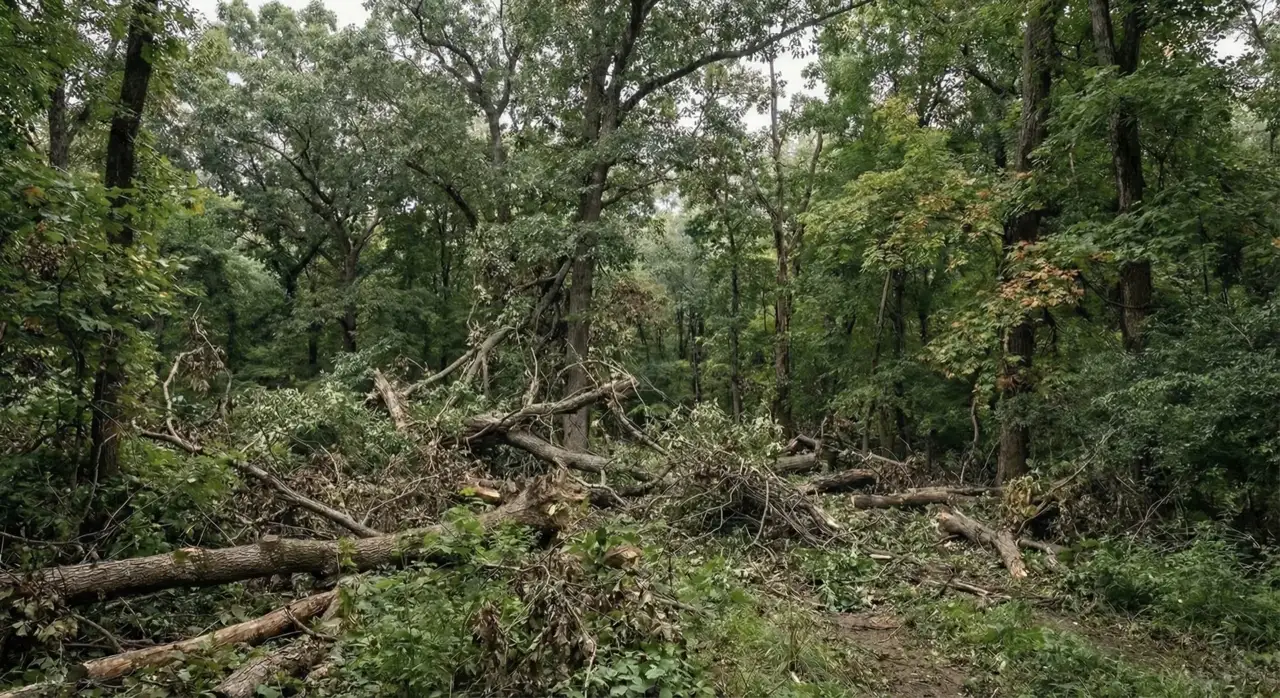
Trail creation is the process of clearing a navigable path through wooded or overgrown land using forestry mulching equipment — producing trails for hiking, horseback riding, ATVs, or property access with a natural mulch surface that blends with the surrounding landscape.
Trail creation and path clearing in Northern Kentucky uses forestry mulching to cut trails through wooded and overgrown property. Trail clearing costs $150–$400 per hour, and most recreational trails of a few hundred feet can be completed in 2–4 hours. The mulched vegetation creates a natural, erosion-resistant walking surface.
Open Up Your Property with Custom Trails
You own the land, but you cannot enjoy it if you cannot get through it. EarthWorx Land Management creates custom trails and paths through wooded and overgrown properties using our compact track loader with a forestry mulching head. Whether you want hiking trails for your family, ATV paths for recreation, horseback riding trails, or access roads to reach the back of your property, we cut clean, navigable paths that follow your terrain instead of fighting it. Our forestry mulching approach leaves a natural mulch surface — a 2–4 inch layer of wood chips on the ground that is comfortable underfoot, drains rainwater instead of turning to mud, and looks like it belongs in the woods. Compare that to a bulldozed trail, which strips topsoil, creates ruts, and turns into a muddy trench after the first hard rain. The difference is obvious the day we finish, and it is even more obvious six months later when a dozed trail is washing out and ours still looks clean. The terrain in Northern Kentucky, Southeast Indiana, and the Greater Cincinnati area is perfect for trail systems — rolling Appalachian foothills, hardwood forests, creek bottoms, ridge lines with views of the Ohio River valley. But that same terrain makes trail building tricky if you do not know what you are doing. Steep clay hillsides, limestone shelves that crop up unexpectedly, seasonal creek crossings that flood every spring. We have built trails on all of it. Our tracked machine handles slopes that would send a wheeled machine sliding, and the forestry mulching head works through undergrowth, saplings, and brush without disturbing the ground underneath. The result is a trail that works with the land, not against it.
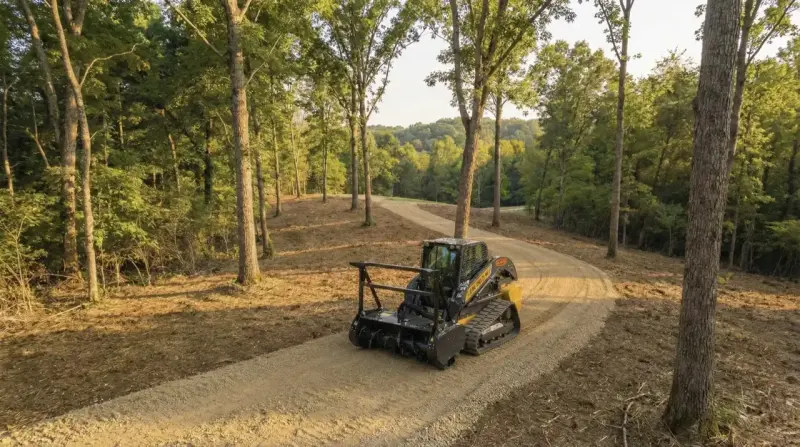
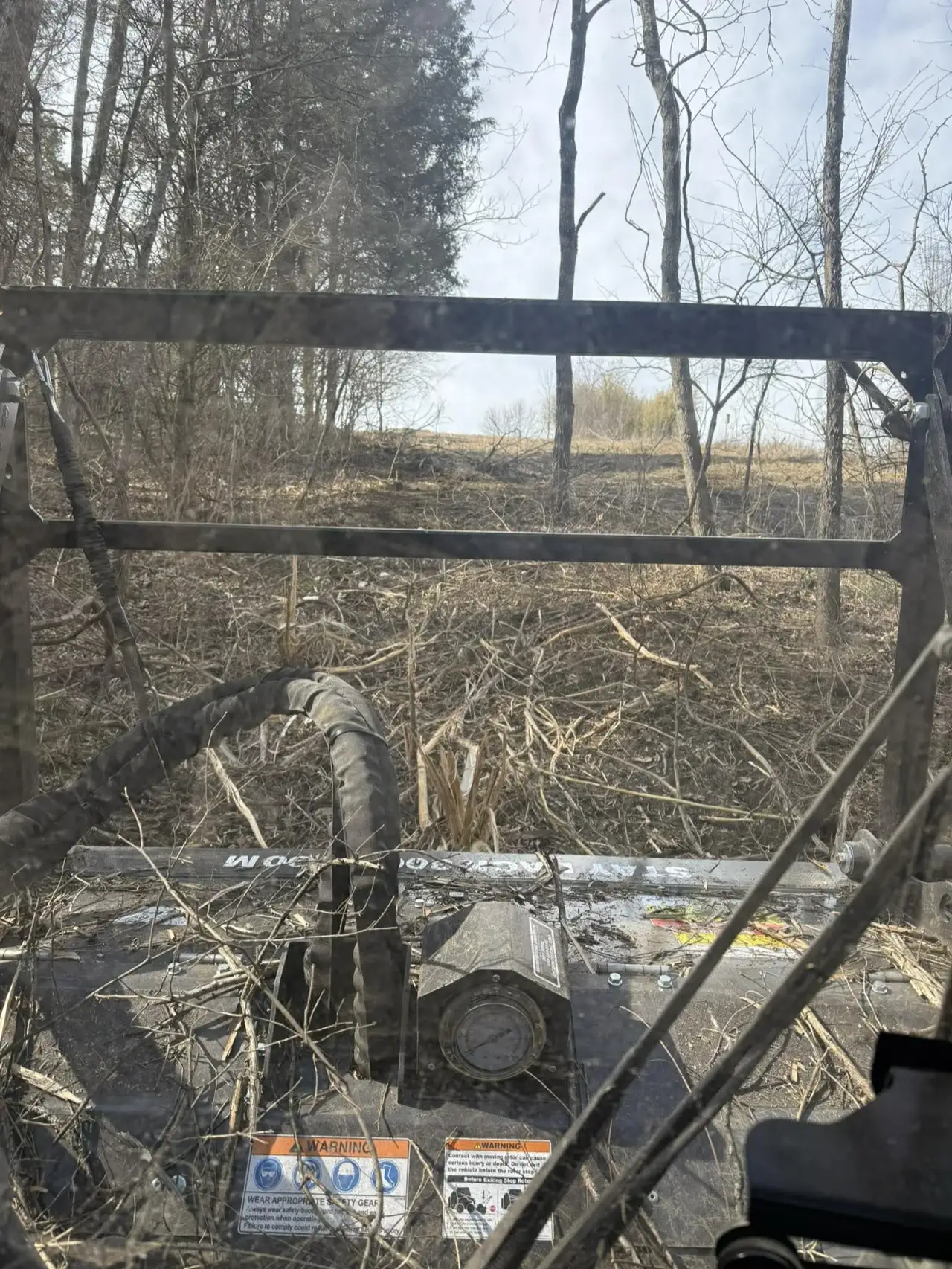
Trail work is some of our favorite work, honestly. You walk through somebody's 20 acres of woods, figure out where a path would feel right, and then you watch it come to life in a few hours. The mulch we leave behind makes a natural trail surface that drains well and actually looks like it belongs there. People use these for walking, ATVs, horses, or just getting back to their deer stand without bushwhacking through brush every time. There is something satisfying about turning an impassable thicket into a path you can stroll down with your kids.
Trail creation using forestry mulching produces a fundamentally different result than bulldozed or hand-cut trails. A bulldozed trail strips the topsoil, exposes bare earth, and creates an erosion-prone surface that turns to mud in rain and dust in drought. A hand-cut trail takes weeks and still leaves stumps, roots, and an uneven surface. A forestry-mulched trail preserves the root systems and topsoil beneath a layer of natural wood chip mulch. This mulch surface drains well, feels comfortable underfoot, resists erosion, and blends seamlessly with the surrounding forest floor. After a year, the edges green up naturally and the trail looks like it has been there for decades.
The most common trail projects we handle in our service area include hiking and walking trails for families who want to enjoy their wooded property, ATV and UTV paths for recreational riders who need a wider cleared corridor, horseback riding trails for the many equestrian properties in Pendleton and Grant counties, hunting access trails that let you reach tree stands and food plots without crashing through brush and spooking every deer in the county, and property access roads for reaching barns, ponds, or remote areas of large parcels that currently require a 20-minute walk through overgrowth.
Trail planning is as important as trail construction, and we spend real time on it. We walk your property with you before any work begins, talking about the route, width, what trees you want to save, and what the trail needs to accomplish. For longer trail systems, we factor in terrain, drainage patterns, grade, and scenic views when suggesting routes. On the steep hillsides common in Northern Kentucky — especially along the Licking River drainage and the ridge lines in Pendleton County — we plan switchbacks and contour routes that keep the grade manageable and prevent water from channeling down the trail surface. A trail that runs straight down a hillside is an erosion ditch waiting to happen.
Width depends on use. A walking trail for your family might be 4–6 feet wide — just enough to stroll side by side. An ATV or UTV trail needs 8–10 feet to handle handlebars and some elbow room on curves. A horseback riding trail works best at 6–8 feet with overhead clearance for the rider. A full access road for trucks or farm equipment needs 12 feet or more. We can mix widths on the same property — a wide access road from the house that narrows to a walking path when it reaches the back woods.
Seasonal conditions matter for trail longevity around here. Spring rains saturate the clay soils, and trails that were not planned with drainage in mind turn into creeks. We incorporate subtle grading — a slight crown or outslope — so water sheets off the trail surface instead of running down the middle. At creek crossings and low spots, we can recommend simple solutions like rock fords or culverts depending on flow volume. The goal is a trail you can use year-round, not just in dry weather.
Why Choose Trail Creation
Built-In Trail Surface
The mulched wood chips create a 2–4 inch natural surface that drains rainwater, stays firm underfoot, and looks like part of the forest — no imported gravel or construction materials needed.
Any Width, Any Use
Walking paths at 4–6 feet, ATV trails at 8–10 feet, horseback corridors at 6–8 feet, or truck-width access roads at 12+ feet. We match the width to the purpose and can mix widths across a single trail system.
No Erosion, No Ruts, No Mud
Bulldozed trails strip topsoil and wash out after the first rain. Our method preserves root systems and topsoil under a mulch layer that sheds water instead of channeling it. The trail holds up through Kentucky spring rains.
Your Best Trees Stay
We route around the oaks, walnuts, and mature hardwoods that give your property its character. The trail winds naturally through the woods instead of cutting a sterile straight line.
Usable the Day We Finish
No waiting for construction, grading, or surface materials. When we pull the machine off the trail, you can walk, ride, or drive it immediately.
Our Trail Creation Process
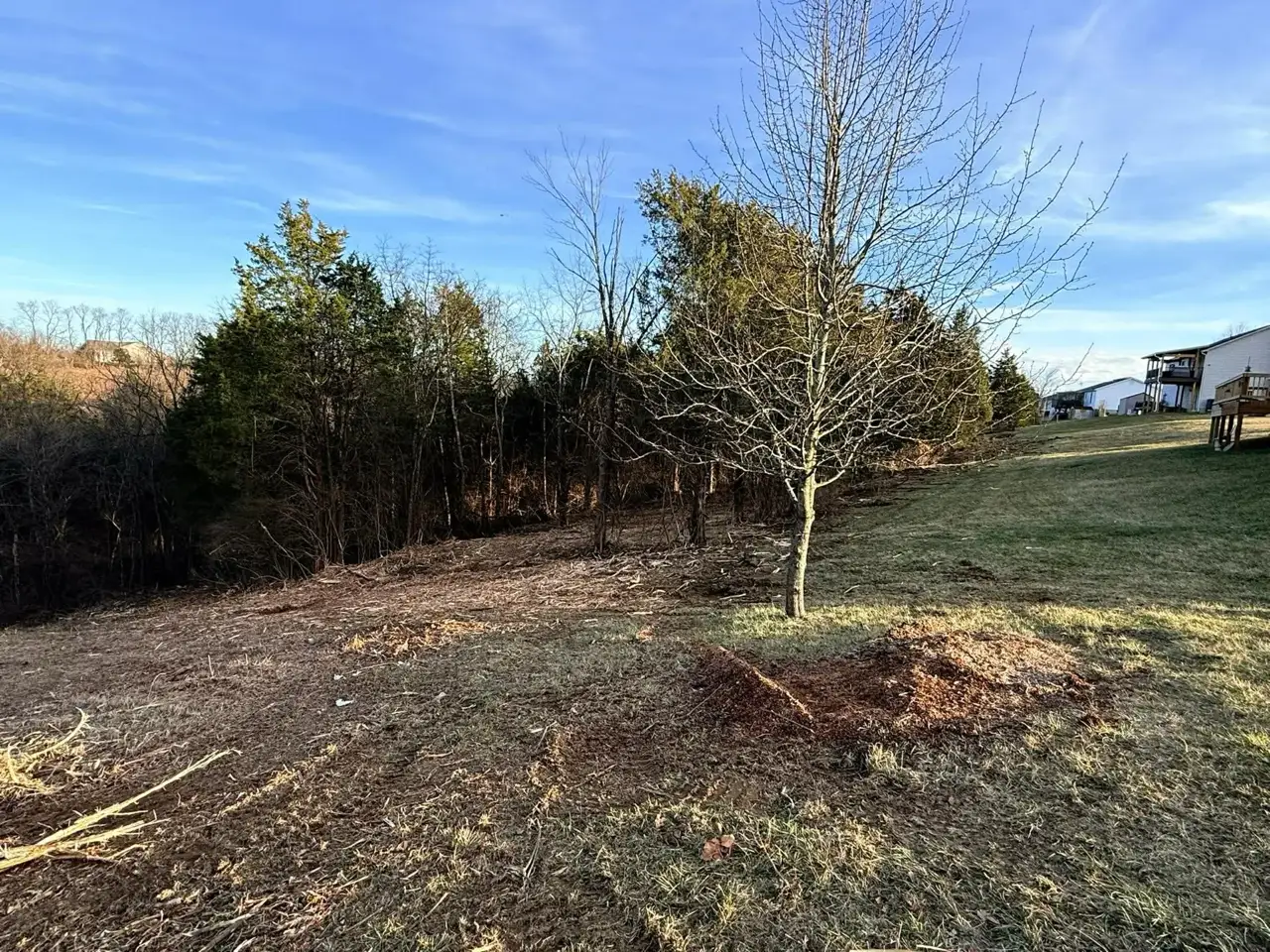
We walk the property with you to plan the trail route, width, and any features to preserve or avoid.
Our forestry mulching equipment clears the planned route, grinding brush, saplings, and small trees into natural mulch.
The finished trail is clean, navigable, and ready for immediate use with a natural mulch surface.
Typical cost: $150–$400 per hour
Exact pricing depends on your property. We provide free on-site estimates.
Trail Creation FAQ
Common questions about trail creation in Northern Kentucky and Cincinnati.
Trail clearing runs $150–$400 per hour depending on how thick the vegetation is and how steep the terrain gets. A few hundred feet of walking trail through moderate brush might take 2–4 hours. A half-mile loop through dense woods on hilly ground could take a full day. We walk the route with you first and give you a clear estimate before starting.
A bulldozed trail scrapes the ground bare — stripping topsoil, exposing clay, and creating a surface that turns to mud when it rains and dust when it dries. A mulched trail leaves the ground intact under a layer of natural wood chips. Water drains through instead of pooling. You do not get ruts. And it looks like a trail, not a construction scar. After a season, the edges grow in naturally and it feels like it has always been there.
Yes — it is some of the most common trail work we do. The Appalachian foothills across Pendleton, Grant, and Bracken counties are steep, and a straight-down trail would wash out in a season. We cut switchbacks and contour routes that keep the grade rideable while channeling water off the trail surface. Our tracked machine handles slopes that would stop wheeled equipment.
The wood chip surface typically lasts 3–5 years before it decomposes enough to need refreshing. High-traffic areas like ATV trails may compact or thin out sooner. When the surface wears down, we can re-mulch the trail in a fraction of the time it took to create it originally, since the route is already established and we are just clearing new growth.
Absolutely. We build access roads up to 20 feet wide for trucks, tractors, and farm equipment. Many property owners start with a vehicle-width access road to their back acreage and then branch off narrower walking or ATV trails from there. We can plan the whole network in one visit.
Wet spots and seasonal creeks are part of the landscape around here. For low-flow crossings, a simple rock ford works well — we can clear the approach on both sides and recommend a stone supplier. For areas with standing water or heavier flow, a culvert pipe under the trail keeps your feet dry. We plan the route to minimize wet crossings, but when they are unavoidable, there are practical solutions that do not cost a fortune.
Related Services
Related Articles
Clearing Land for Horse Property in Kentucky: Pasture, Paddocks, and Trails
How to clear and prepare land for horse property in Kentucky — from pasture establishment and paddock layout to riding trail creation and removing trees toxic to horses.
7 min read readClearing Land for Food Plots: A Northern Kentucky Landowner’s Guide
The part that makes or breaks a food plot happens before you ever buy seed — clearing the right spot the right way. Here is how we clear land for food plots on tri-state whitetail ground.
8 min read readClearing Shooting Lanes and Hunting Trails: A Northern Kentucky Guide
A food plot brings the deer in, but shooting lanes and quiet trails are what let you actually hunt it. Here is how we cut lanes and access trails on tri-state whitetail ground.
8 min read readWhere We Offer Trail Creation
Ready for Trail Creation?
Get a free, no-obligation estimate for your trail creation project.
Try our cost calculator · Serving Northern Kentucky, Greater Cincinnati, and Southeast Indiana · 24/7 — Emergency Service Available