
Clearing Shooting Lanes and Hunting Trails: A Northern Kentucky Guide
A food plot brings the deer in, but shooting lanes and quiet trails are what let you actually hunt it. Here is how we cut lanes and access trails on tri-state whitetail ground.
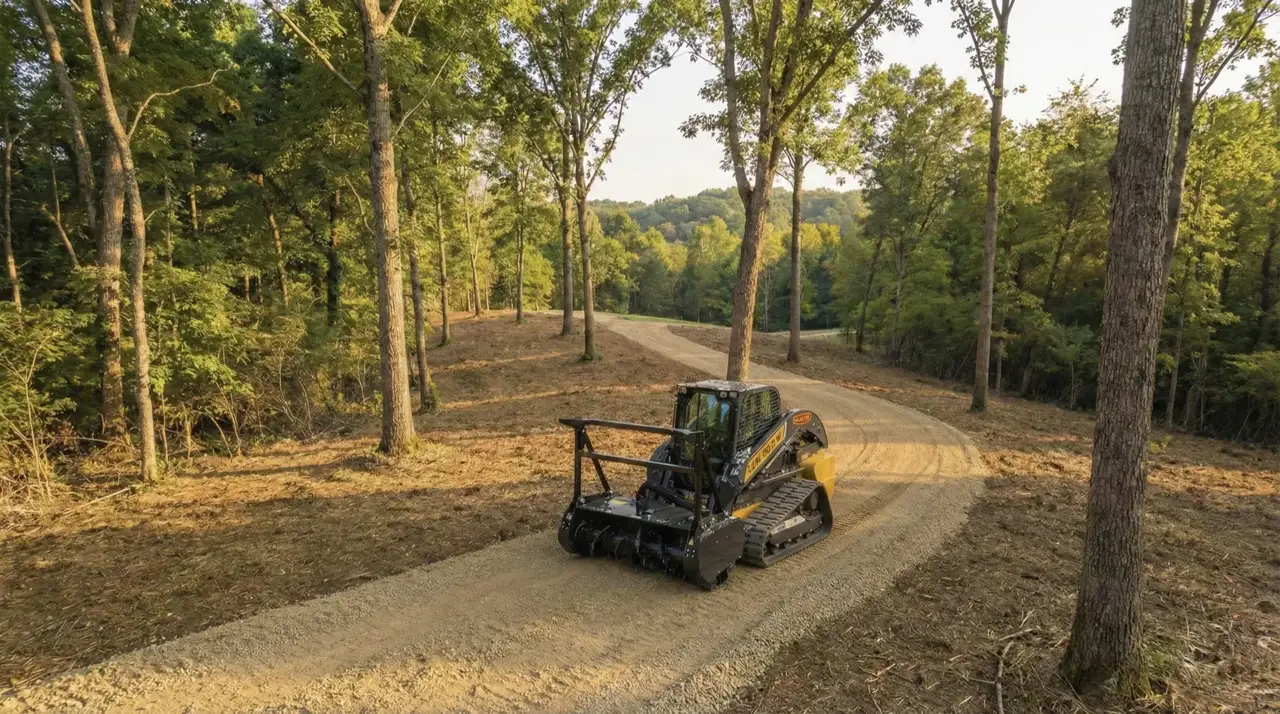
Shooting lanes are narrow cuts that open a clean shot from your stand, and hunting trails are the quiet routes you use to slip in and out. In Northern Kentucky, Greater Cincinnati, and Southeast Indiana, forestry mulching is the fastest way to cut both: one machine grinds the brush in place in a single pass, with no burn piles and no torn-up ground. Most lane-and-trail systems get done in a day.
Need this handled on your property? Free on-site estimate.
You can have the best food plot in the county and still go home empty-handed if you cannot get to your stand without spooking every deer on the place, or if the one buck you have been watching steps out behind a wall of honeysuckle. The plot pulls deer in. Shooting lanes and quiet trails are what let you actually hunt them. This is the follow-on to clearing land for food plots, and it is the part guys tend to shortcut right up until opening morning.
Across Northern Kentucky, Greater Cincinnati, and Southeast Indiana we cut a lot of both, usually on the same day we are already clearing a plot or thinning a treeline. Here is how we think about it on tri-state ground.
What Are Shooting Lanes and Hunting Trails?
They do two different jobs, and it helps to keep them straight.
A shooting lane is a narrow opening cut through brush and low limbs so you have a clean, ethical shot from a fixed stand or blind. It is not a road. Done right, it is a slot a few feet wide fanning out to the ranges you actually shoot.
A hunting trail is an access route: a quiet path in to your stand and back out that keeps you off the plot and out of the bedding. Some folks also want wider ATV and equipment trails to haul a deer out, run a mower, or reach the back forty. Same machine, wider cut.
On most tracts around here the two work together. You cut the access trail so the deer never smell where you walk, then cut two or three tight lanes off the stand so you get a shot when one steps out.
Why Use Forestry Mulching to Cut Shooting Lanes and Trails?
You can hand-cut lanes with a chainsaw and a bush blade, and plenty of guys do. It works for a lane or two. Once you are cutting a whole trail system through NKY understory, forestry mulching is a different level of fast and clean.
- One pass, brush to mulch. The machine grinds standing saplings, briars, and honeysuckle into a thin layer right where they stood. No dragging, no burn piles to babysit.
- A firm, walkable surface. The mulch mat leaves you a quiet path to walk instead of a rutted, muddy line a dozer would leave.
- No torn-up dirt. Nothing scraped into a pile, so you are not opening the ground to erosion on a hillside or a creek bottom.
- You can adjust on the fly. We can widen a lane a couple of feet or swing a trail around a bedding pocket while the machine is sitting there, instead of guessing with a saw.
The mistake I see most is guys opening lanes way too wide. A shooting lane is not a fairway. You want it just wide enough for a clean shot and no wider, because every extra foot you open is more edge for the deer to skirt and more daylight that makes them nervous. Tight lanes hunt better than wide ones.
If your trail runs through bigger standing timber, that shades into full land clearing, and we will tell you straight when a route is worth it and when you are better off going around.
How Wide Should a Shooting Lane Be?
Width depends on how you hunt and how far you are willing to shoot. Here is roughly how it shakes out on tri-state whitetail ground.
| Setup | Lane width | Length to open |
|---|---|---|
| Bow / crossbow | 3–5 ft | Out to 30–40 yards |
| Muzzleloader / rifle | 5–8 ft | Out to your effective range |
| Access / ATV trail | 6–10 ft | Whole route |
Most bowhunters cut two or three short lanes fanning out from the stand rather than one wide one. That gives you options for the wind without turning the woods into a clearing. For gun season you can reach a little farther, but the same rule holds: open the shot, not the whole hillside.
One thing our terrain forces you to think about is up and down. On a ridge or a hollow side, a lane has to account for the slope and the low limbs a deer walks under, not just the horizontal distance. We cut for the actual line the deer will cross, not a line on a map.
Where Should You Cut Hunting Trails on Kentucky Terrain?
Our ground is ridges, hollows, and creek bottoms, not flat Midwest cropland, and that terrain decides where a trail belongs.
- Use the terrain to hide your walk. Run access trails in the bottoms, behind a ridge, or along a creek so your movement and scent stay below the deer.
- Keep the wind in mind. Lay the trail so your normal walk-in wind blows away from bedding and away from the plot.
- Stay off the field edge. Skirt your food plots and openings instead of walking the edge, which is exactly where deer stage at last light.
- Watch the wet spots. In our creek bottoms a trail through a low, muddy stretch turns into a rutted mess by November. We route around it or firm it up while we clear.
The goal of a good trail is simple: get to the stand and back without the deer ever knowing you use it. On tight Boone County and Kenton County parcels that matters even more, because there is less room to keep your distance to begin with.
How Do Access Trails Keep Deer From Patterning You?
Deer pattern pressure faster than most people give them credit for. If you walk the same field edge every evening, the older deer shift to moving after dark within a week or two. A hidden access trail is the fix.
When the route in keeps your scent and movement out of the bedding and off the plot, the deer keep using the spot in daylight because nothing tells them they are being hunted. That is the whole point of cutting a real trail instead of just walking in the easy way. It is also why we like to cut the trail and the honeysuckle that chokes the understory at the same time, so you get a clean walk and better visibility in one job. Our honeysuckle removal guide goes deeper on that fight.
When Is the Best Time to Clear Lanes and Trails?
Earlier than most people call us, honestly. Kentucky archery season opens the first Saturday in September, so the sweet spot to cut lanes and trails is mid-summer through August. That gives the disturbed brush time to settle and lets the deer get used to the new opening well before you are sitting over it.
Cut everything the week before the opener and you are hunting a spot that looks and smells brand new to every deer around. Give it a few weeks and it becomes part of the furniture. If you are also putting in a fall plot, doing the lanes, trails, and plot together in July is the cheapest and cleanest way to go, since the machine is already on your ground.
Late winter, right after season, is the other good window. The woods are open, you can see your sightlines clearly, and you have all spring and summer for the cut to green in and settle.
What Does It Cost to Clear Shooting Lanes and Trails?
Lanes and trails are priced by how much you are cutting and how thick it is, not by the acre the way an open field is. A handful of shooting lanes and a short access trail is often a half-day job. A full trail system connecting several stands across a bigger Grant County or Dearborn County, Indiana farm runs longer.
The biggest savings is combining it with other work. If we are already on site clearing a plot or a treeline, adding lanes and trails is far cheaper than a separate trip, because you are not paying to haul the machine out a second time. For how tri-state clearing is priced in general, our land clearing cost per acre guide lays out the numbers.
Bill’s Honest Take
If I had to rank it, I would say a hidden access trail is worth more than the shooting lanes. Guys obsess over the shot and then blow the whole setup walking in loud through the bedding. Cut the trail so the deer never know you are there, keep your lanes tight, and put the work in during the summer so the woods settle. Do that and you are hunting deer that still move in daylight, which is the whole game.
We Serve These Areas
Related Articles
Forestry Mulching vs. Traditional Land Clearing: Which Is Better for Your Property?
A head-to-head comparison of forestry mulching and traditional land clearing. We break down cost, speed, soil impact, and which method wins for different property types.
8 min read readForestry Mulching vs. Bulldozing: Cost, Speed, and Results Compared
A direct comparison of forestry mulching and bulldozing for land clearing. Costs, timelines, soil damage, and honest advice on which method fits your project.
7 min read readForestry Mulching vs. Brush Hogging: When to Use Each Method
Brush hogging and forestry mulching handle different problems. Here is when each method makes sense, what they cost, and where one clearly beats the other.
6 min read readClearing Shooting Lanes and Hunting Trails: A Northern Kentucky Guide FAQ
For bow and crossbow hunting, three to five feet is usually plenty. Most bowhunters cut two or three short lanes fanning out from the stand toward 30 to 40 yards rather than one wide opening. Keeping lanes tight gives you clean shots without opening so much woods that the deer get nervous and skirt the edge.
Aim for mid-summer through August, before Kentucky archery season opens the first Saturday in September. Cutting a few weeks ahead lets the disturbed brush settle and lets deer get used to the new opening before you hunt it. Late winter, right after season, is the other good window because the woods are open and the cut has all spring to green back in.
Yes, and it is the cheapest way to do it. Because it is the same forestry mulching machine on the same day, adding lanes and access trails while we clear a food plot avoids a second trip and a second mobilization charge. Most landowners have us do the plot, the shooting lanes, and the access trails in one visit.
They help a lot. Deer shift to moving after dark quickly when they keep smelling and hearing a hunter on the same route. A trail routed through the bottoms, behind a ridge, or along a creek keeps your scent and movement below and away from bedding, so the deer keep using the spot in daylight because nothing tips them off that they are being hunted.
For most hunting trails, forestry mulching is better. It grinds the brush in place and leaves a firm, quiet, walkable mulch surface without scraping the topsoil into a pile the way a dozer does. That matters on our Northern Kentucky and Southeast Indiana hillsides and creek bottoms, where torn-up ground erodes and rutted dozer lines turn to mud by November.
Ready to Get Started?
Free on-site estimates for all properties in our service area.
Ready to Clear Your Land?
Get a free, no-obligation estimate for your project. We respond fast and show up on time.
Try our cost calculator · Serving Northern Kentucky, Greater Cincinnati, and Southeast Indiana · 24/7 — Emergency Service Available