
Land Clearing in Grant County, KY: A Local Owner’s Guide
Grant County is I-75 corridor country, all rolling shale hills and old tobacco ground filling back in with cedar. Here is what land clearing actually looks like here, and what to sort out before you start.
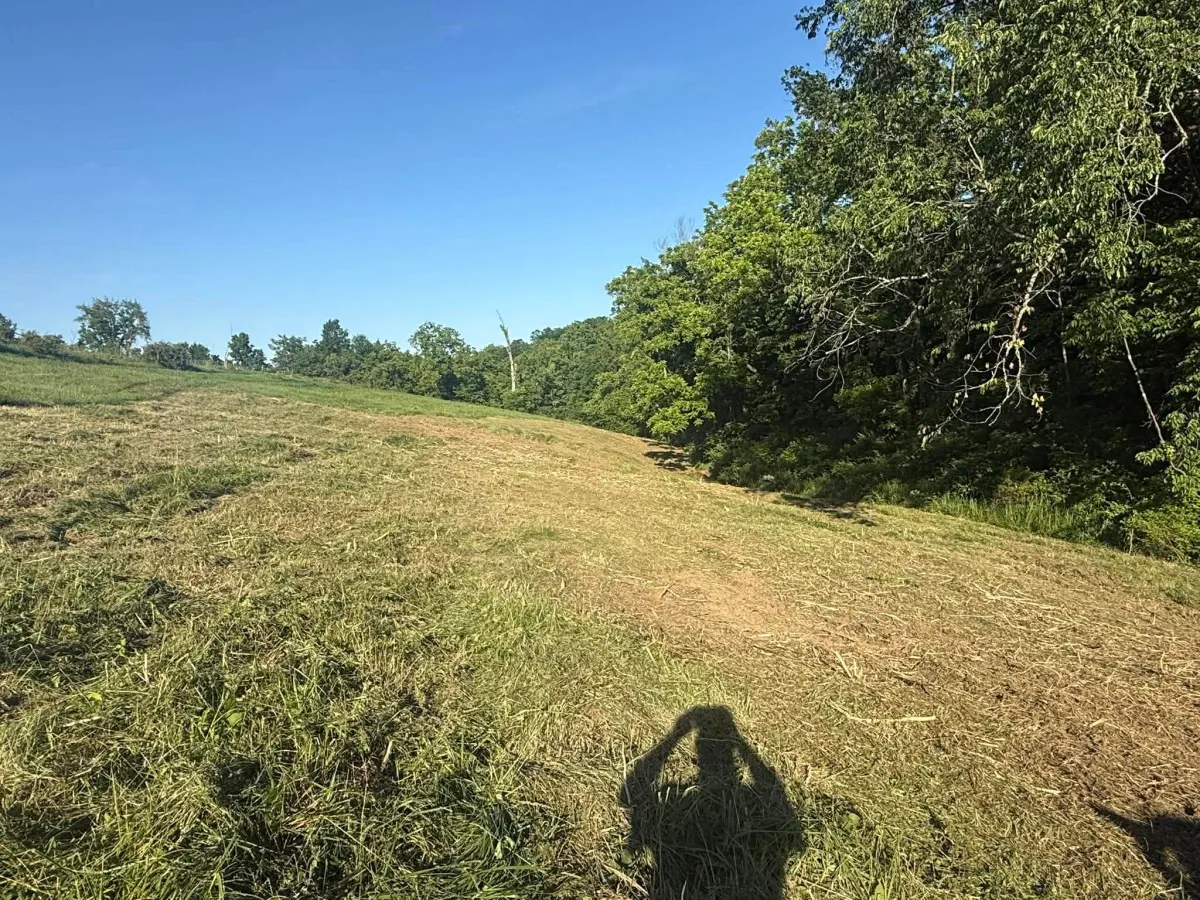
Land clearing in Grant County, KY runs about $1,500 to $4,000 per acre depending on terrain and how thick the growth is. Any project that disturbs one acre or more needs a Kentucky KYR10 (NPDES) permit and an erosion control plan. Unlike Boone, Kenton, and Campbell counties, Grant County sits outside the Sanitation District No. 1 stormwater program, so you deal with the state and the county rather than SD1. Forestry mulching is usually the fastest option for the county’s wooded ridges and grown-up pastures and finishes most residential lots in one to two days.
Need this handled on your property? Free on-site estimate.
Grant County Is I-75 Corridor Country
Grant County holds around 25,000 people spread across rolling ground between Cincinnati and Lexington, with I-75 running straight down the middle of it. Williamstown is the county seat, sitting up on the ridge by the lake. Dry Ridge is the retail and commuter hub a few exits north, and Crittenden anchors the top of the county closest to Boone. Corinth sits at the far south end where Grant, Owen, and Harrison counties come together.
This is not the built-out river country you find up in Kenton County. Grant County is farm ground and woods, with pockets of newer housing pushing out from the interstate exits. The Ark Encounter brought a wave of traffic and building to the Williamstown side back in 2016, and the commuter growth around Dry Ridge and Crittenden keeps steady as people trade a longer drive to Cincinnati for more land and a lower price. Most of the clearing we do here is opening ground for a new house, taking back a pasture that grew up, or cleaning up a wood lot or fence line.
What Land Clearing Jobs Are Common in Grant County?
The work sorts itself out by what somebody is trying to do with the land.
Homesite Clearing Near the I-75 Exits
Someone buys three to ten acres off a road like Barnes Road, KY-22, or one of the ridge roads running back from Williamstown or Dry Ridge, and needs a building pad, a driveway, and a spot for a septic field opened up. These parcels are usually part woods, part old field grown up in cedar, honeysuckle, and locust. We open the pad and the drive, leave a screen of trees along the road and the property line for privacy, and grind the stumps so the site is ready for an excavator and a septic install.
Pasture and Tobacco-Ground Reclamation
Grant County farmed tobacco for generations, and a lot of that ground stopped being worked when the buyout came through. Fields that have not been grazed or cut in ten or fifteen years fill in fast with cedar, blackberry, and thorn. We mulch that growth back down to usable ground for hay, cattle, or a future home site. Pasture reclamation is some of the steadiest work we have out here, especially south of Williamstown toward Corinth and Mason.
Lake and Ridge Lots Around Williamstown and Boltz
Williamstown Lake and Boltz Lake pull in people who want a place near the water, and those lots come with their own quirks. The ground drops toward the shoreline, the growth along the bank is thick, and you have to leave a buffer of vegetation near the water to hold the bank and stay right with the rules. Selective clearing works better than a full scrape on lake ground. We open the view and the yard while keeping enough root structure on the slope to keep it from sliding.
Fence Rows and Farm Cleanup
Plenty of calls are simpler than a full clearing. A fence row swallowed by honeysuckle, a grown-up corner of a field, or a wood line creeping into the pasture. A mulcher walks those and grinds the brush in place in a few hours, which beats a crew with chainsaws and a burn pile every time.
Is Forestry Mulching or Traditional Clearing Better for Grant County Land?
For most of the wooded and grown-up jobs out here, forestry mulching is the better fit. A mulcher grinds standing trees and brush into a layer of chips right where they stand, so there is no burning, no hauling, and no debris pile to deal with. On the thin shale ground Grant County is built on, leaving those chips and the root mat in place also does real good for erosion.
Traditional land clearing with a dozer still earns its keep when you need stumps and roots pulled for a foundation, or when you are moving dirt anyway. Here is how the two compare for a typical Grant County job:
| Factor | Forestry mulching | Dozer clearing |
|---|---|---|
| Speed (residential lot) | 1-2 days | 3-5 days |
| Debris removal | None, chips stay on site | Hauling or burning required |
| Soil disturbance | Minimal, roots stay intact | Heavy, topsoil disturbed |
| Erosion risk on shale hills | Low | Higher |
| Best for | Brush, saplings, wooded lots, pasture | Stump removal, grading |
Honest take from Bill: on Grant County ground I steer most folks toward mulching, and the shale is the reason. These hills slip when you strip them bare and then get a hard rain. Grinding the growth in place and leaving the roots to hold the bank saves you a washout and a re-seeding bill down the road. When you are pouring a foundation on that exact spot, a dozer is the right tool and I will say so. Everywhere else, in-place mulching wins.
Do You Need a Permit to Clear Land in Grant County?
Grant County is more rural than its neighbors to the north, and the permitting reflects that. Know what applies before equipment shows up.
- State erosion permit at one acre: Any land disturbance of one acre or more needs a Kentucky KYR10 general permit (the state NPDES stormwater permit) and an erosion and sediment control plan. That threshold is the same statewide.
- No SD1 here: This is the big difference from Boone, Kenton, and Campbell counties. Grant County sits outside the Sanitation District No. 1 stormwater program, so there is no SD1 plan review. You work with the Kentucky Division of Water and the county instead, which is usually a lighter lift.
- County planning and zoning: The Grant County Planning Commission handles zoning and subdivision questions, which come into play when your clearing ties to a new build or a lot split. Cities like Williamstown, Dry Ridge, Crittenden, and Corinth set their own rules inside city limits.
- Lakeshore and floodplain ground: Clearing near Williamstown Lake, Boltz Lake, or along a creek can pull in buffer requirements or a floodplain permit. Check before you take out the growth on the bank.
- Working farms: Normal agricultural work usually has more leeway than construction clearing, but the one-acre erosion rule still applies once you are disturbing that much ground.
You do not have to untangle all of this yourself. We clear in Grant County often enough to know when a permit gets triggered, and we can point you to the right county office or an engineer who draws up the plan.
How Do Grant County’s Eden Shale Hills Affect Clearing?
Grant County sits in the Eden Shale hills, and that ground drives a lot of what we do. The soil is thin, sits on top of shale, and does not hold together well once the plants that anchor it are gone. Strip a slope bare and you have a real erosion problem the first time it rains hard. That is the single biggest reason we lean on mulching here. Leaving the root mat and a layer of chips keeps the hillside where it belongs.
The timing matters too. A lot of Grant County ground carries heavy clay in the low spots, and that clay turns to soup in a wet spring. Running tracked equipment across saturated ground leaves ruts and compaction that take years to heal, so in a wet stretch we will push a job back a week or two to let it firm up. Working wet clay does more harm than good, and any contractor who tells you otherwise is going to hand you a mess.
What Does Land Clearing Cost in Grant County?
Price comes down to what is on the ground and how hard the site is to work. These are the ranges we typically see across the county:
| Project type | Typical cost range |
|---|---|
| Light brush / fence row (per acre) | $1,200 - $2,500 |
| Residential homesite (0.5-1 acre, wooded) | $2,500 - $5,000 |
| Overgrown pasture reclamation (per acre) | $1,500 - $3,000 |
| Heavy timber clearing (per acre) | $3,000 - $6,000 |
| Stump grinding (per stump) | $75 - $250 |
Bigger, open pasture jobs tend to sit at the low end per acre because the machine can just keep moving. Steep, heavily wooded ridge lots run higher because the work is slower and more careful. For a fuller breakdown of what moves the number, see our guide to land clearing cost per acre in Kentucky.
How Do You Choose a Grant County Land Clearing Company?
A few things worth checking before you hire anyone:
- They understand shale ground. Ask how they handle erosion on a slope. A crew that wants to scrape everything bare on a Grant County hillside does not understand the dirt they are working.
- They know the one-acre rule. Any honest contractor can tell you when a KYR10 permit gets triggered and help you get the erosion plan handled.
- They carry insurance. Get proof of liability coverage before anyone runs a machine on your property.
- They give a written scope. What gets cleared, what stays, and whether stumps are included should be on paper before work starts.
- They match the machine to the job. A crew that only owns a big dozer will push a dozer on a job that called for a mulcher.
We go deeper on this in our guide to choosing a land clearing company in Northern Kentucky. If your property is closer to the interstate up north, our Boone County land clearing guide covers neighboring ground.
EarthWorx clears and mulches across all of Grant County, from the Williamstown lake country down to Corinth and up through Dry Ridge and Crittenden. If you have a homesite, a field, or an overgrown corner you want handled, reach out for a walk-through and a straight quote.
Sources & References
- Kentucky Pollutant Discharge Elimination System (KPDES) Stormwater Construction Permit KYR10 — Kentucky Energy and Environment Cabinet, Division of Water
- Sanitation District No. 1 Service Area (Boone, Kenton, and Campbell Counties) — Sanitation District No. 1 of Northern Kentucky
We Serve These Areas
Related Articles
Forestry Mulching vs. Traditional Land Clearing: Which Is Better for Your Property?
A head-to-head comparison of forestry mulching and traditional land clearing. We break down cost, speed, soil impact, and which method wins for different property types.
8 min read readForestry Mulching vs. Bulldozing: Cost, Speed, and Results Compared
A direct comparison of forestry mulching and bulldozing for land clearing. Costs, timelines, soil damage, and honest advice on which method fits your project.
7 min read readForestry Mulching vs. Brush Hogging: When to Use Each Method
Brush hogging and forestry mulching handle different problems. Here is when each method makes sense, what they cost, and where one clearly beats the other.
6 min read readLand Clearing in Grant County, KY: A Local Owner’s Guide FAQ
For projects that disturb less than one acre you usually do not need a state erosion permit, though county zoning, lakeshore buffers, and floodplain rules can still apply. Once you disturb one acre or more, you need a Kentucky KYR10 (NPDES) permit and an erosion control plan. Unlike Boone, Kenton, and Campbell counties, Grant County is outside the Sanitation District No. 1 program, so there is no SD1 review to clear here.
Most residential forestry mulching jobs in Grant County run $1,500 to $4,000 per acre. Open, level pasture sits at the low end because the machine keeps moving, while steep, heavily wooded ridge lots around Williamstown and Boltz Lake price higher because the work is slower and more careful.
A forestry mulcher grinds standing trees, brush, and saplings down to chips, and it can grind a stump flush to the ground, but it is not built to pull the root ball out. When you need the roots gone for a foundation or a septic field, that is a job for a dedicated stump grinder or a dozer. For most Grant County pasture and lot clearing, grinding the growth and stumps in place is all you need.
Grant County sits in the Eden Shale hills, where thin soil over shale slides easily once the vegetation holding it is stripped away. Forestry mulching leaves the root mat and a layer of chips in place, which holds the slope and cuts erosion far better than scraping the ground bare with a dozer.
Late fall through early spring is ideal because the ground is firmer and the leaves are down, which makes the work cleaner and easier to see. The heavy clay in Grant County’s low spots gets soft in a wet spring, so we sometimes wait for a dry stretch to avoid rutting and compaction.
Ready to Get Started?
Free on-site estimates for all properties in our service area.
Ready to Clear Your Land?
Get a free, no-obligation estimate for your project. We respond fast and show up on time.
Try our cost calculator · Serving Northern Kentucky, Greater Cincinnati, and Southeast Indiana · 24/7 — Emergency Service Available